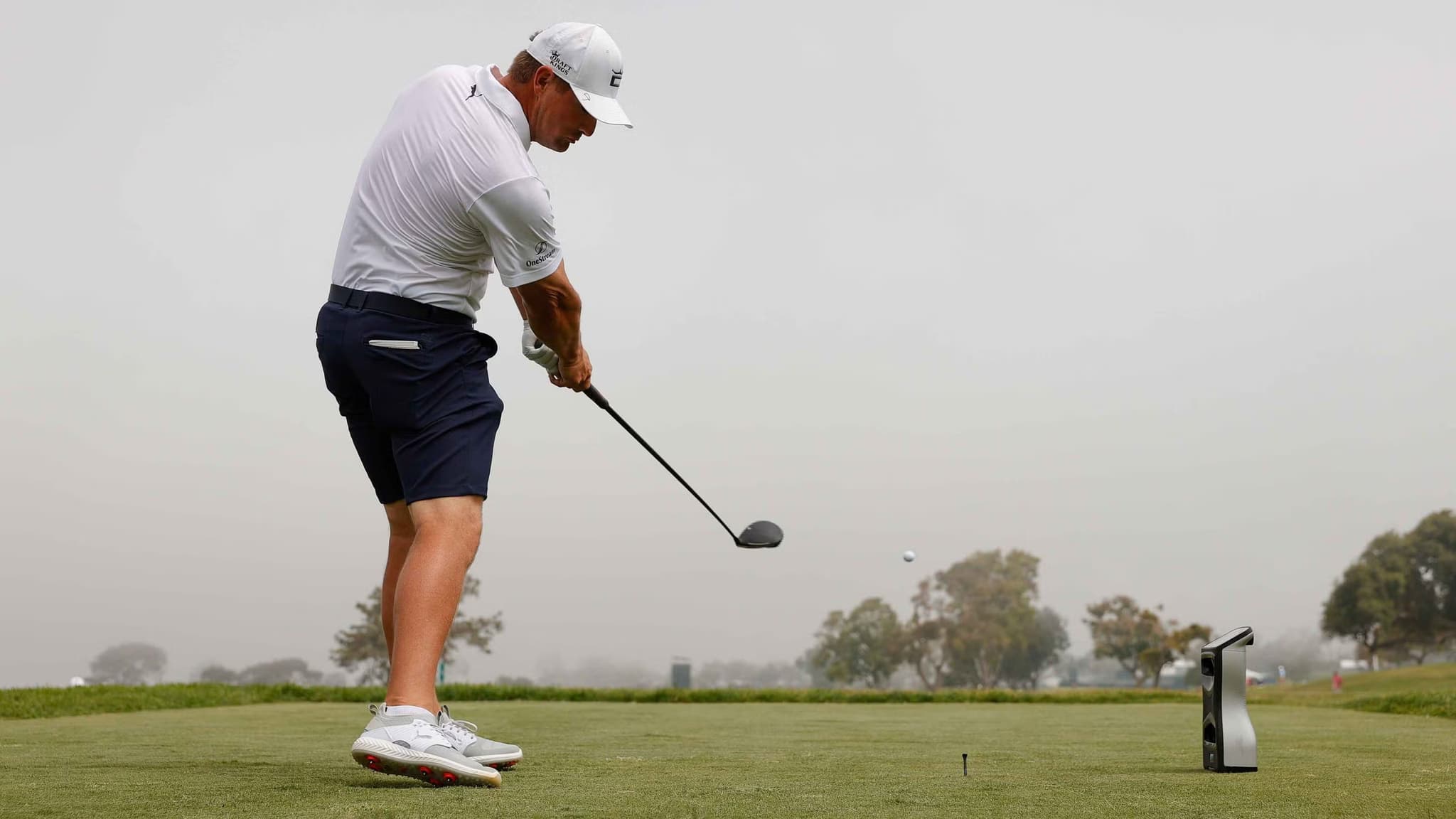
If you’re comparing TrackMan iO vs TrackMan 4, you’re not trying to decide which system is more accurate. Both deliver elite, tour-trusted ball data.
The real decision is about ownership. One is designed to live permanently inside an indoor simulator and disappear into the room. The other is built to move, travel, and validate full ball flight anywhere golf launch monitors are used.
The fastest way to separate them is simple. The TrackMan iO is built for permanent indoor installations where space efficiency, instant feedback, and zero setup matter most. The TrackMan 4 is built for portability and outdoor validation, and it can be used indoors only when the room is designed around its depth requirements.
Both systems operate within the same TrackMan ecosystem, run TrackMan Performance Studio (TPS), and share the same course library and analytics tools. Accuracy is not the question. Space constraints, workflow, latency, installation reality, and how the system feels to use over time are what actually separate these two systems.
TrackMan iO vs TrackMan 4: Core Differences at a Glance
The TrackMan iO is a ceiling-mounted launch monitor designed exclusively for indoor simulators. Once installed, it never moves. There is no unit behind the player, no setup routine before sessions, and no recalibration when switching between right- and left-handed players.
The TrackMan 4 is a portable, floor-based dual radar system designed to track full ball flight outdoors. Indoors, it can function effectively, but only when the room provides sufficient depth and the setup process is repeated consistently.
Same software. Same data credibility. Very different ownership experience.
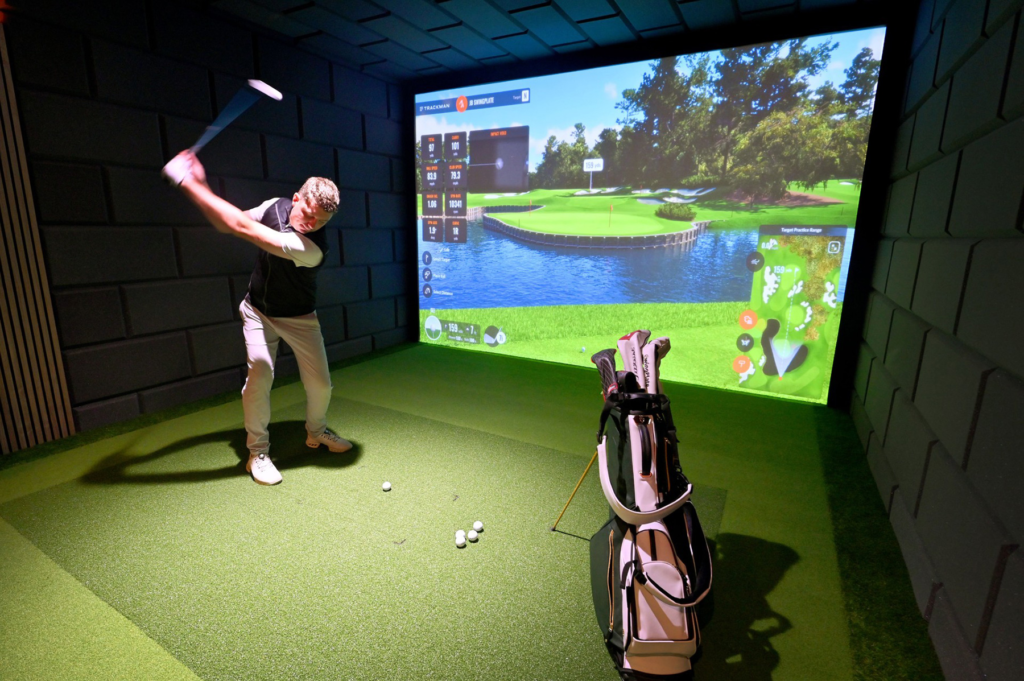
TrackMan iO vs TrackMan 4 Accuracy and Software
At their core, both systems deliver elite performance. Ball speed, launch angle, spin, carry distance, and dispersion patterns are accurate and repeatable on both platforms.
Practice tools, simulation visuals, and performance analytics all come from the same TrackMan software foundation, so neither system holds an advantage in graphics quality or course access.
If all you care about is ball data quality, both systems easily meet that bar. The separation happens in how the data is captured and how each system fits into real indoor and outdoor environments.
TrackMan iO Indoor Design and Permanent Installation
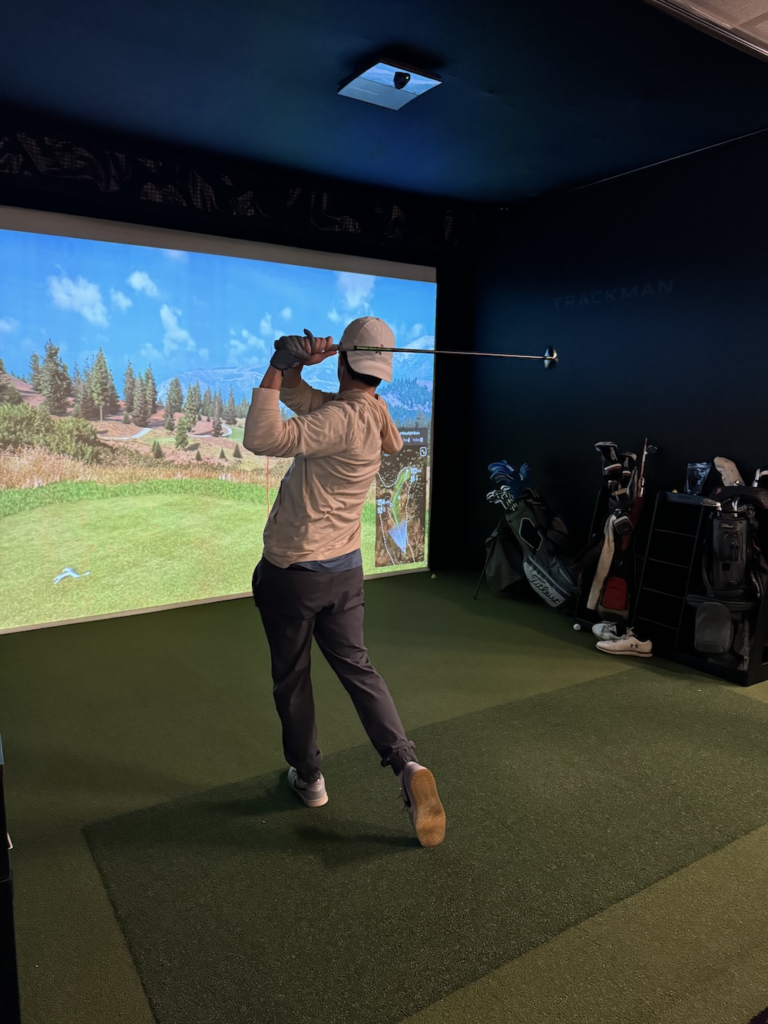
The TrackMan iO was built specifically for indoor use. It mounts overhead and uses a camera-first hybrid design with Optically Enhanced Radar Tracking. Because it lives above the hitting area, there is no unit behind the player and no minimum ball flight requirement beyond normal swing clearance.
That single design choice removes the biggest limitation most indoor buyers underestimate: room depth.
Once installed, the system becomes a fixed part of the room. There is no alignment ritual before sessions, no floor hardware to protect, and no recalibration when switching between players. You walk in, drop a ball, and hit.
TrackMan 4 Portability and Outdoor Ball Flight Validation
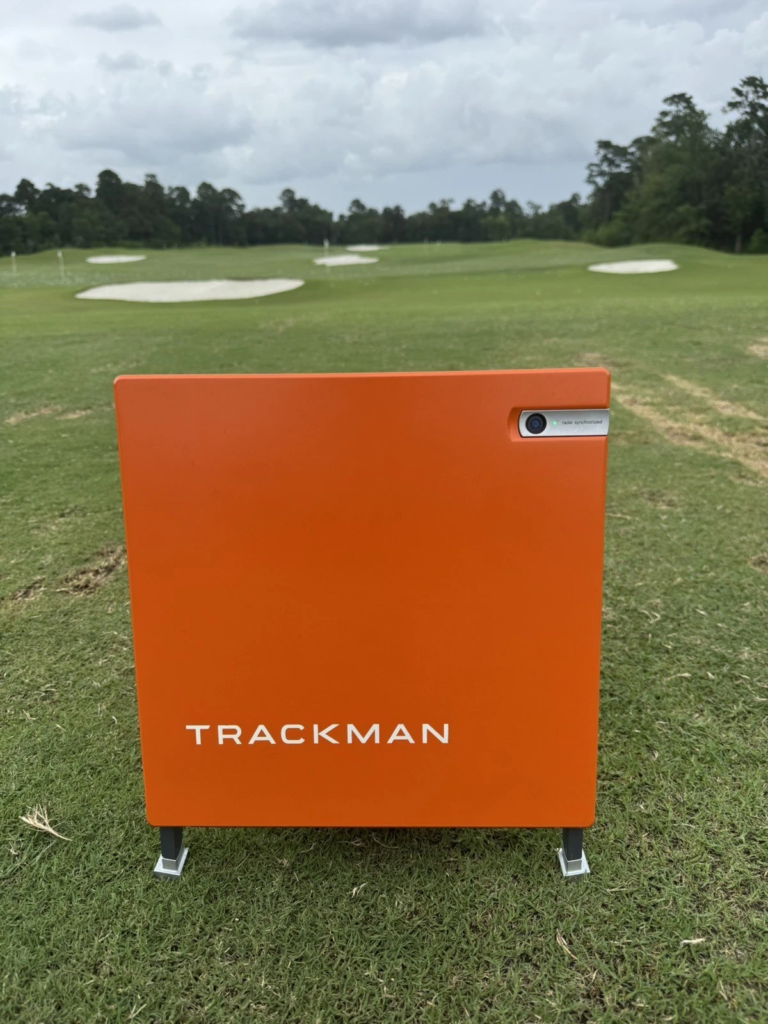
The TrackMan 4 exists for a very different purpose. It is a portable dual-radar system designed to track full ball flight outdoors and validate numbers in real playing conditions. One radar tracks club delivery while the other follows the ball from launch to landing.
Outdoors, this is where the TrackMan 4 earns its reputation. It remains the benchmark for tour players, fitters, and coaches who need true ball flight validation. Indoors, that same design introduces constraints. The unit must sit well behind the player and requires meaningful ball flight before the screen to function optimally.
It can work indoors, but the room must be built around it.
TrackMan iO vs TrackMan 4 Indoor Space Requirements
This is where most buying decisions are actually won or lost.
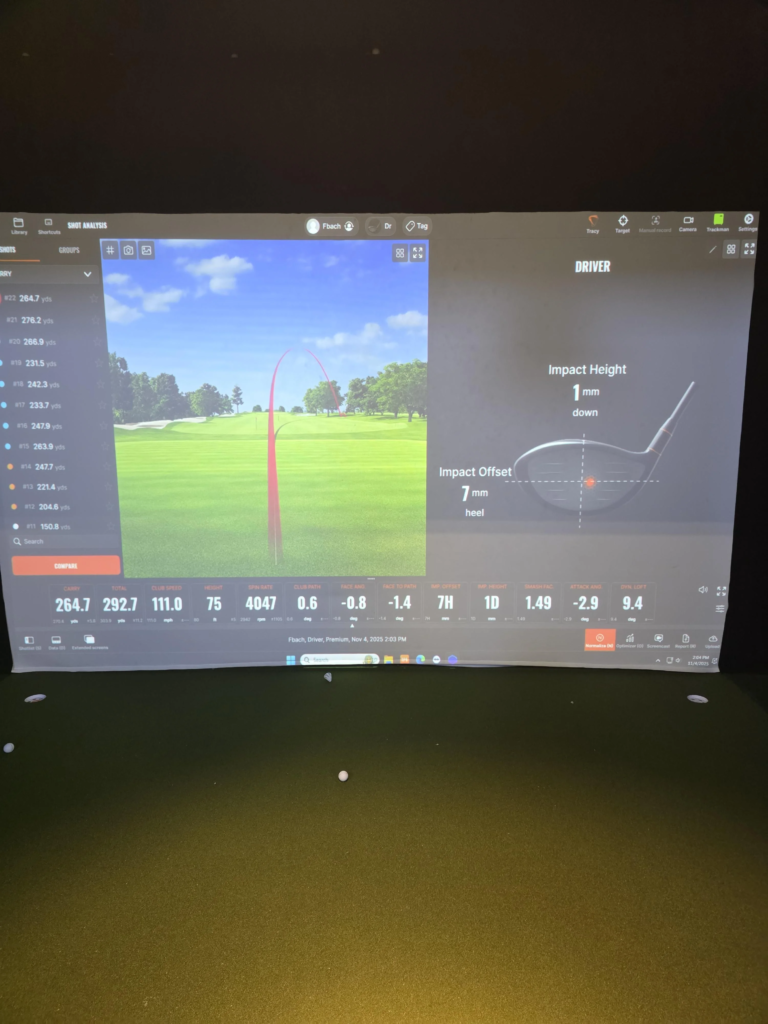
The TrackMan iO trades depth for ceiling height. A ceiling height in the 9.5 to 10 foot range is typically where installation becomes comfortable, with the unit mounted a few feet in front of the hitting area. Once installed, room depth becomes far less critical beyond basic safety clearance.
The TrackMan 4 trades ceiling flexibility for depth. Indoors, it commonly requires roughly 16 to 18 feet from the unit to the impact screen to capture sufficient ball flight data. That requirement shapes the entire room layout and often disqualifies otherwise usable home spaces.
If your room is shallow but tall enough, the iO fits naturally. If your room is deep and flexible, the TrackMan 4 becomes viable indoors.

TrackMan iO vs TrackMan 4 Shot Response and Latency
This difference becomes obvious during real play.
In indoor simulator environments, the TrackMan iO processes shots in under a second, with ball flight appearing almost immediately after impact. That responsiveness keeps practice flowing and makes simulator play feel continuous.
Indoors, the TrackMan 4 typically takes several seconds to fully process and display a shot due to its reliance on extended ball flight. That delay is expected, but it can subtly interrupt rhythm during practice sessions. Outdoors, this delay largely disappears.
TrackMan iO vs TrackMan 4 Spin Measurement Indoors
Spin accuracy indoors is another practical divider.
The TrackMan iO measures spin directly using high-speed cameras, allowing players to use a standard golf ball while still receiving measured spin values.
The TrackMan 4 can also deliver strong indoor spin data, but often relies on Titleist RCT balls. Without them, spin may be calculated rather than directly measured, which can add friction to regular practice.
TrackMan iO vs TrackMan 4 Impact Video and Feedback
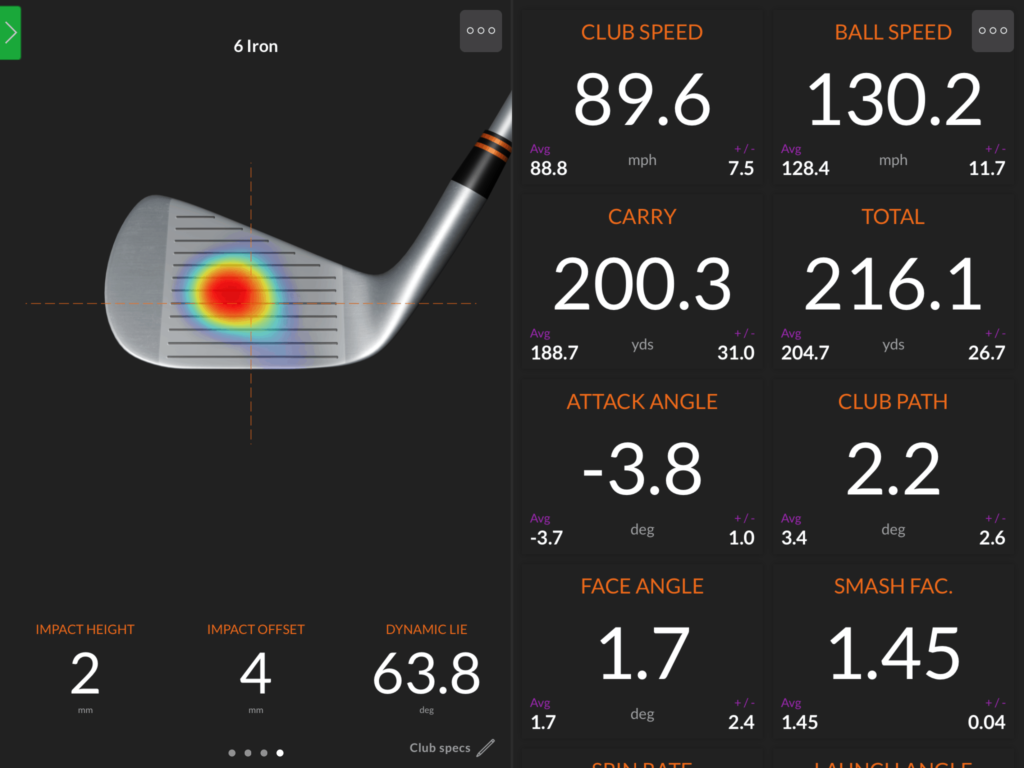
Because the TrackMan iO is mounted overhead launch monitor, it provides high-speed impact video that clearly shows club-to-ball contact. Strike location becomes immediately visible, which is especially valuable for indoor practice and instruction.
The TrackMan 4, positioned behind the player, does not provide this overhead strike view.
TrackMan iO vs TrackMan 4 Cost, Subscription, and Ownership
The TrackMan iO typically starts around $13,995, but the base Home package unlocks limited club data. To access full professional club metrics such as path and face angle, most owners move into higher tiers like Home Complete or Commercial packages. Over time, total ownership cost can reach the low-to-mid twenty-thousand range.
Both systems require an ongoing TrackMan software subscription, commonly around $1,100 per year, to maintain updates and full course access. This is standard at this tier and should be considered part of long-term ownership.
The TrackMan 4 usually starts around $23,495. That price is justified through flexibility. It can live in a simulator bay one day and travel to the driving range the next, and it holds strong resale value due to its professional reputation.
TrackMan iO vs TrackMan 4: Which One Should You Buy
Choose the TrackMan iO if you are building a permanent indoor simulator and want instant feedback, clean floor space, seamless left- and right-handed play, and a system that becomes part of the room once installed.
Choose the TrackMan 4 if you need one device that works indoors and outdoors, want true full ball flight validation on the range, and are willing to design your indoor space around depth requirements and setup routines.
Frequently Asked Questions
Should I buy the TrackMan iO or TrackMan 4?
Choose the iO if you're building a permanent indoor simulator room. Choose the TrackMan 4 if you need outdoor ball flight tracking or portability. The iO is indoor-only while the TrackMan 4 works both indoors and outdoors.
Is the TrackMan iO more accurate than the TrackMan 4?
Both deliver TrackMan-level accuracy. The iO is optimized specifically for indoor environments, while the TrackMan 4 is designed primarily for outdoor use with indoor capability.
Which TrackMan is cheaper?
The TrackMan iO Home starts around $13,995 while the TrackMan 4 starts around $23,495. The iO is significantly cheaper but limited to indoor use only.
Related Articles
Check out these related guides and reviews from Par Percision: