
Some days your swing feels automatic. Other days, it’s like your game stopped improving and your body forgot everything it learned. That’s exactly why golf swing drills for beginners matter so much.
If you’re new to golf or still building consistency, these golf swing drills for beginners will help you find rhythm, balance, and control fast. They focus on small movements-grip, posture, tempo, and rotation-that turn inconsistency into reliable contact.
After testing drills used by coaches, pros, and new players across local ranges and indoor setups, these ten proved to work the fastest. They’re simple, practical, and easy to do anywhere-no simulator or fancy gear needed.
If you’re ready to build a swing that feels smooth and repeatable, these are the drills that actually make it happen.
1. The Grip Check Drill

Everything starts with how you hold the club. A poor grip causes slices, hooks, and weak contact before you even take the club back.
Set your club across the fingers of your lead hand-not the palm. The heel pad should rest firmly on top, and your lead thumb should sit just right of center. Wrap your trail hand so both “V” shapes between thumb and forefinger point to your trail shoulder.
Beginners using a golf simulator should aim for light pressure-around four out of ten. Too tight, and you’ll block rotation; too loose, and the face opens early. You’ll feel the club move naturally through impact without fighting your hands.
What it improves: Clubface control, consistency, and solid contact.
2. The Mirror Posture Drill

Posture sets the foundation for your swing. Most beginners lose power because they bend their knees too much or hunch their shoulders.
Stand in front of a mirror with a short iron. Bend from your hips, keep your spine straight, and lightly flex your knees. Your arms should hang naturally from your shoulders, forming a triangle with the club.
During the backswing, turn your shoulders over your trail foot while keeping your hips stable. On the downswing, rotate through to a balanced finish and hold it for two seconds. You should feel your weight shift naturally into your lead side without losing posture.
What it improves: Balance, rotation, and tempo control.
3. The Ball-in-Hands Drill

If your arms move faster than your body, you’ll struggle with consistency. This drill fixes that.
Hold a small soccer ball or pillow with both hands. Pivot your shoulders until the ball reaches ear height, keeping elbows close and your lead wrist flat. On the downswing, start with your hips and let the ball drop toward your trail thigh.
For beginners, think “hips first, hands follow.” That feeling teaches proper sequence and prevents casting the club early. You’ll notice smoother timing and effortless power.
What it improves: Sequencing, timing, and club delivery.
4. The Gate Drill
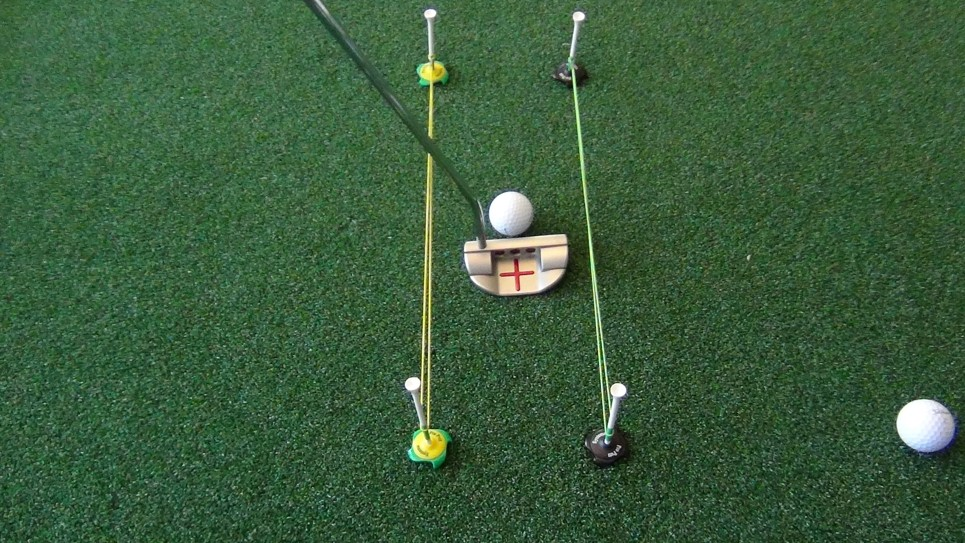
Clean contact is all about controlling the low point of your swing.
Set two tees or head covers a few inches apart to form a small gate. Take half-swings and brush the ground between the gate without touching either side. Once consistent, place a ball just in front of the gate.
Beginners should focus on brushing slightly ahead of center-this creates ball-then-turf contact. You’ll feel the difference immediately when the club glides instead of digs.
What it improves: Low-point control and consistent strike.
5. The Wall Drill
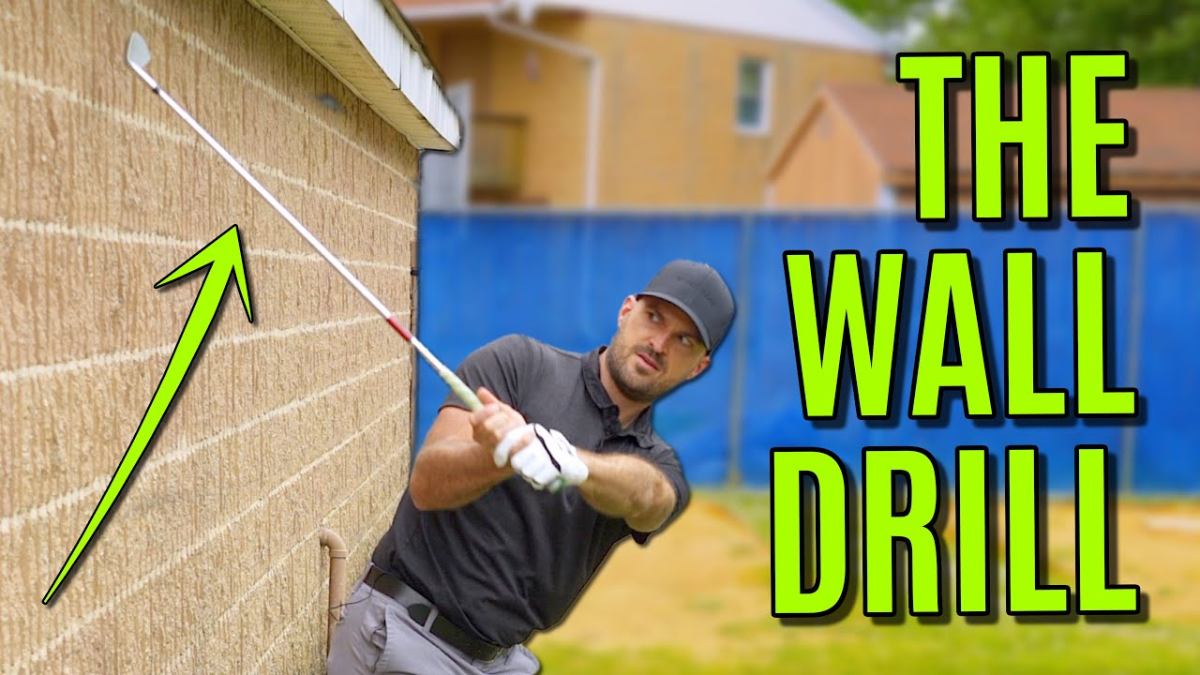
Losing posture ruins accuracy. The wall gives instant feedback.
Stand with your backside gently touching a wall. As you take the club back, keep that contact through your backswing and follow-through. If you move away, you’re standing up too early.
Focus on feeling your hips rotate around your spine instead of moving forward. Beginners can do this daily indoors for two minutes-it builds perfect posture memory without hitting a ball.
What it improves: Posture, rotation, and spine stability.
6. The Step-Through Drill
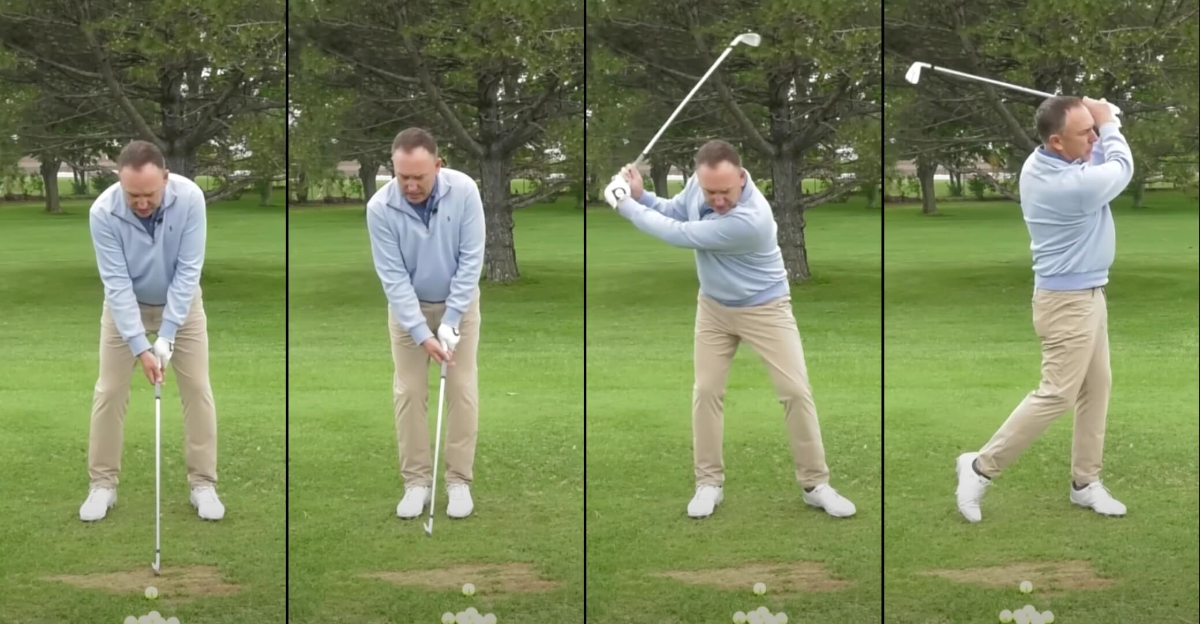
Weight transfer is what gives your shots power and balance.
Start with your feet together. As you take the club back, step toward your target and swing through naturally. Let your trail foot rise onto its toe as you finish.
Beginners should think “smooth step,” not “fast step.” The rhythm teaches your body how to move energy through impact instead of spinning off balance. You’ll feel the club flow through impact instead of fighting momentum.
What it improves: Weight transfer, rhythm, and balance.
7. The Pause-at-the-Top Drill

Rushing the downswing leads to thin shots and slices.
Take a normal backswing and pause for one second at the top before starting down. Keep your grip light and your chest steady. Let your lower body start the motion first, then let your arms follow.
Beginners often feel awkward at first-that’s a good sign. It means your timing is adjusting to a smoother rhythm. You’ll start to feel control instead of tension.
What it improves: Transition tempo and timing.
8. The Alignment Stick Drill

Alignment problems cause most beginner misses.
Lay one stick along your target line and another across your toes. Take slow swings and make sure your club head travels on the same path as the target stick.
Watch for where the shaft points at waist height-when it matches your target line, you’re on plane.
Beginners should do 10 slow swings daily before hitting balls to groove this visual.
What it improves: Swing plane and directional control.
9. The Impact Bag Drill

Impact decides everything-face angle, compression, and distance.
Set an impact bag (or pillow) where a ball would be. Make slow swings, stopping when the club meets the bag. Keep your hands slightly ahead of the clubhead, weight forward, and eyes steady.
You’ll feel that solid “thump” when the club compresses through impact. Beginners should start with half swings to avoid flipping their hands.
What it improves: Compression, hand position, and ball-first contact.
10. The Speed Whoosh Drill

Speed isn’t about swinging harder-it’s about releasing energy in the right spot.
Flip your driver upside down and swing it. Listen for the “whoosh.” The goal is to hear that sound just past your lead foot.
Beginners tend to release too early-so focus on shifting your weight forward before letting the club release. You’ll feel speed build naturally instead of forcing it.
What it improves: Swing speed, release timing, and rhythm.
Final Thoughts
You don’t need a simulator or launch monitor to improve your swing.
Just 10 minutes a day with the right drills can completely change your consistency.
Start small. Pick one drill and repeat it until it feels natural. Record your progress once a week. You’ll start noticing better contact, smoother tempo, and more control with every round.
These beginner golf swing drills build the muscle memory and consistency that turn frustrating rounds into repeatable success.
If you’re also working on accuracy, check out my breakdown of the Best Golf Launch Monitors to measure tempo and ball speed at home.
That’s how the best players practice-focused, consistent, and efficient. Now you’ve got the same foundation to build yours.
Recommended Practice Schedule
Practice these drills three times per week, rotating between contact, balance, and tempo. Start with five minutes per drill, focusing on quality over quantity.
You’ll see measurable improvement in just a few sessions-especially when paired with simple launch data or video feedback.
Consistency matters more than duration. Even short, regular sessions build the muscle memory that creates lasting results.
Golf Swing Drills for Beginners: FAQs
What’s the easiest golf swing drill for beginners?
The mirror posture drill. It builds awareness, balance, and shoulder rotation-all without hitting a ball. It’s simple, repeatable, and works in small spaces.
How often should beginners practice golf drills?
Aim for short, consistent sessions-about 15 minutes, three to five days a week. Regular practice builds muscle memory faster than occasional long sessions.
Can I improve my golf swing at home without hitting balls?
Yes. Focus on drills that teach rhythm, posture, and sequencing. Using mirrors, alignment sticks, or even towels helps you train mechanics safely indoors.
Related Articles
Check out these related guides and reviews from Par Percision: