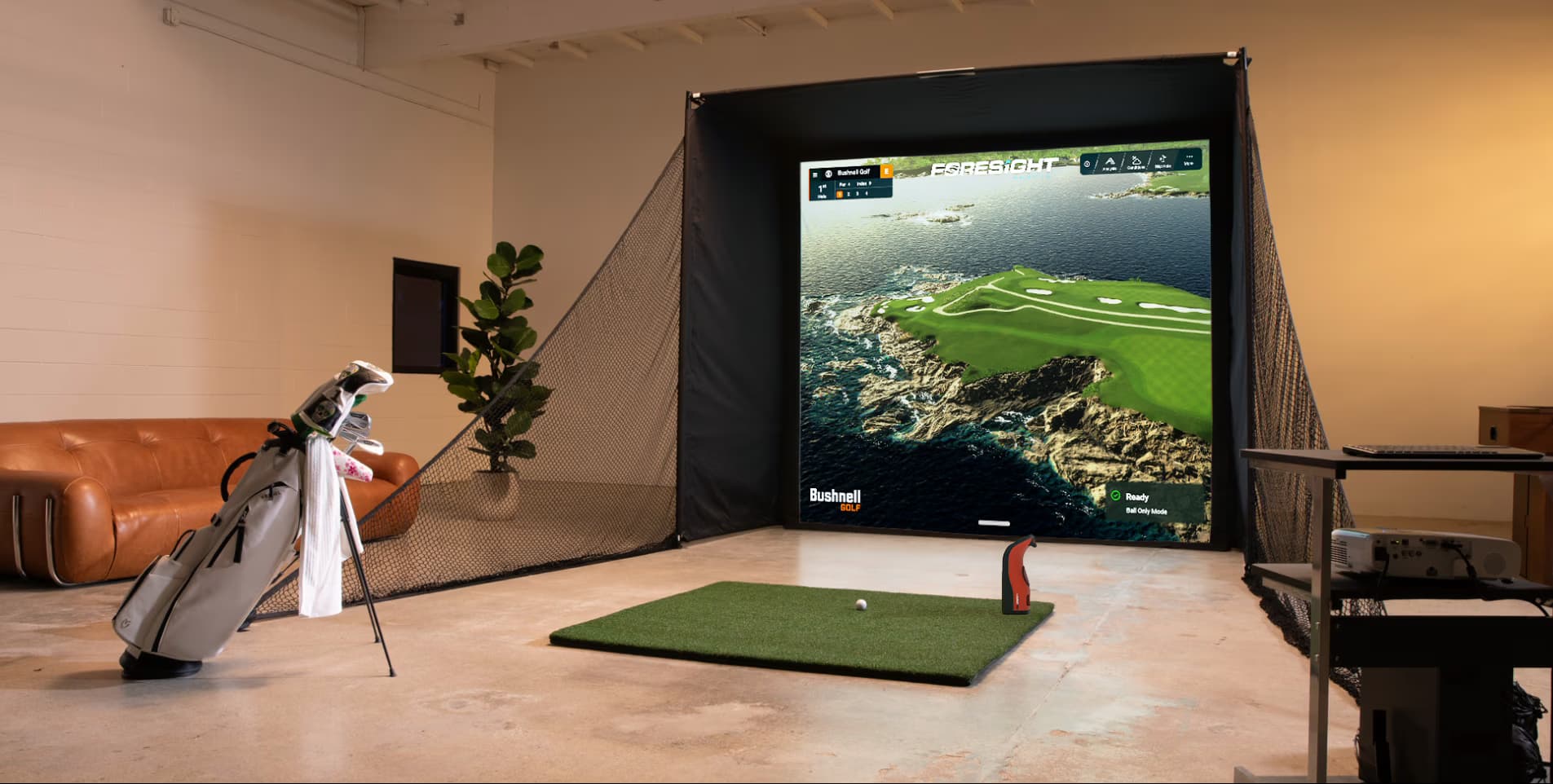
The gap between the Bushnell Launch Pro and the SkyTrak+ becomes clear once you hit on both. The Launch Pro pulls ahead in accuracy, short-game consistency, and how dependable the numbers feel from swing to swing. SkyTrak+ shines with easier setup, a wider hitting zone, and smoother software that feels built for everyday practice.
Each device fits a different style of golfer. Understanding how they behave in real practice sessions makes the choice a lot easier.
Quick Verdict: The Launch Pro offers tighter spin, more stable club data, and stronger short-game reads indoors and outdoors. SkyTrak+ wins on convenience, a wider hitting zone, clean iPad support, and lighter long-term software costs. Your decision comes down to how much precision you want versus how simple you want your simulator life to feel.
This is everything that actually changes your practice.
https://www.youtube.com/watch?v=94l7BITIa54&t=27sAccuracy Differences That Show Up Fast
Accuracy is where these two split quickly.
The Launch Pro uses a camera-based measurement system that captures impact with GC3-like steadiness. Spin windows stay tight, carry distance remains believable, and even slight strike variations show up on the readout. When dialing in wedges or tightening dispersion, that level of consistency matters.
Strong, realistic ball data comes from SkyTrak+ across the entire bag. Indoor environments create tight patterns, and the ball flight it produces gives a genuine reflection of your swing. Only players chasing tour-level spin precision or comparing it directly to a GC3 will see the gap.
One feels more exact, while the other still gives enough accuracy to make real progress.

Club Data Differences That Matter During Real Practice
Club metrics lean toward the Launch Pro. Face angle, lie variation, and path readings show up with steady reliability during long sessions. Anyone making swing changes or reviewing lesson work will appreciate how stable the feedback stays.
Sticker-free club data gives SkyTrak+ a different advantage. No prep steps are required, which keeps practice flowing. Newer players especially like the simplicity because it removes setup friction. The club estimates it delivers work well for everyday improvement, even though deeper precision favors the Launch Pro.
One behaves like a coaching tool. The other keeps practice simple.
 SkyTrak+
Indoor Performance and Feel
Indoor use highlights each device’s strengths in different ways.
The Bushnell Launch Pro reacts instantly after impact. Numbers appear without delay, and the shot-to-shot consistency helps when working on gapping or dialing in specific yardages.
A wider hitting zone gives SkyTrak+ a more relaxed feel indoors. Small shifts left or right don’t interrupt tracking, and once alignment is dialed in, the unit runs smoothly without constant tweaking. Beginners like the ease, and experienced golfers still get enough data quality to keep improving.
Both work well inside. They just create different practice rhythms.
Outdoor Performance on Real Grass
Natural turf exposes the real separation.
Launch Pro handles grass interaction cleanly. Heavy wedges, thin long irons, and varied turf strikes still return stable numbers. That reliability makes outdoor sessions more meaningful and helps confirm that indoor work is translating correctly.
Firm, flat surfaces bring out the best performance in SkyTrak+. Controlled grass or mat environments allow it to track ball flight dependably. Turf that digs or softer lies may introduce more variance, though long-iron and driver performance remains strong for most players.
One adapts better to both environments. The other excels when conditions stay consistent.
 Bushnell Launch Pro
Space and Setup Requirements
Both devices work well in tight simulator rooms.
A functional home bay typically needs:
• 9-10 feet of ceiling height
• About 10 feet of width
• Roughly 10 feet of depth
Placement beside the hitting area makes each unit easy to integrate with projector lanes and stance lines. Switching between left- and right-handed players is simple and doesn’t require moving your entire simulator layout.
Carrying the Launch Pro between rooms feels easier. The SkyTrak+ usually stays put once the bay is set up.
Short-Game and Putting Behavior
Short-game work tends to favor camera systems.
Launch Pro captures slow chips with fewer misses. Touch shots show up cleanly, and putting reads stay consistent without ghost triggers or dropouts. That reliability makes short-game sessions more productive.
Chip detection has improved noticeably on SkyTrak+. With correct alignment, delicate shots read well enough for simulator play and league rounds. Putting performance can vary depending on lighting and mat texture, but it stays usable for daily practice.
One leads in precision. The other stays good enough for casual and simulator play.

Software Experience and Ease of Use
Software creates the largest personality difference.
The SkyTrak+ app feels modern and easy to learn. Bag mapping, skills tests, randomizer modes, and challenges add structure to practice. iPad users get a smooth, lightweight interface.
FSX gives the Launch Pro a premium simulator feel. Graphics look richer, physics behave closer to commercial studios, and the course-play environment feels more realistic. PC-focused players benefit most from the depth and visual detail.
One wins convenience. The other wins simulation quality.
Pricing and Long-Term Value
Both devices start at similar price points:
• Bushnell Launch Pro: 1,999
• SkyTrak+: 1,954
Long-term cost grows with the Launch Pro once FSX unlocks and simulation packages enter the picture. The upside is stronger analytics and a more polished simulator experience.
SkyTrak+ keeps software costs lighter over time.
Ball and club data unlocks come built in, and subscription expectations stay more flexible depending on your needs.
One offers a higher long-term ceiling. The other keeps expenses predictable.
Which One Makes More Sense for Most Golfers?
The Launch Pro works best for players who want reliable accuracy, stable spin numbers, and consistent feedback during wedge work, iron gapping, or indoor and outdoor training. It behaves like a serious tool built for long-term improvement.
Now the SkyTrak+ fits golfers who want quick setup, smooth software, a wider hitting zone, and a laid-back daily practice experience. Long-term cost stays lighter, and the overall feel leans more user-friendly.
Both anchor a home simulator well. The right choice depends on your practice style and how much precision you truly need.
Frequently Asked Questions
Is the Bushnell Launch Pro better than SkyTrak+?
The Bushnell Launch Pro uses Foresight camera technology and is slightly more accurate for spin data. The SkyTrak+ has a better software ecosystem and more subscription plan options. Both are excellent choices in the $2,000-$3,000 range.
Which has better simulator software?
The SkyTrak+ has a wider range of compatible software including TGC 2019, E6 Connect, and WGT. The Bushnell Launch Pro works with FSX Play and E6 Connect.
Which is better for outdoor use?
The SkyTrak+ works outdoors but can struggle in bright sunlight. The Bushnell Launch Pro also works outdoors. Neither is as good outdoors as radar-based systems like the Garmin R50.
Related Articles
Check out these related guides and reviews from Par Percision: