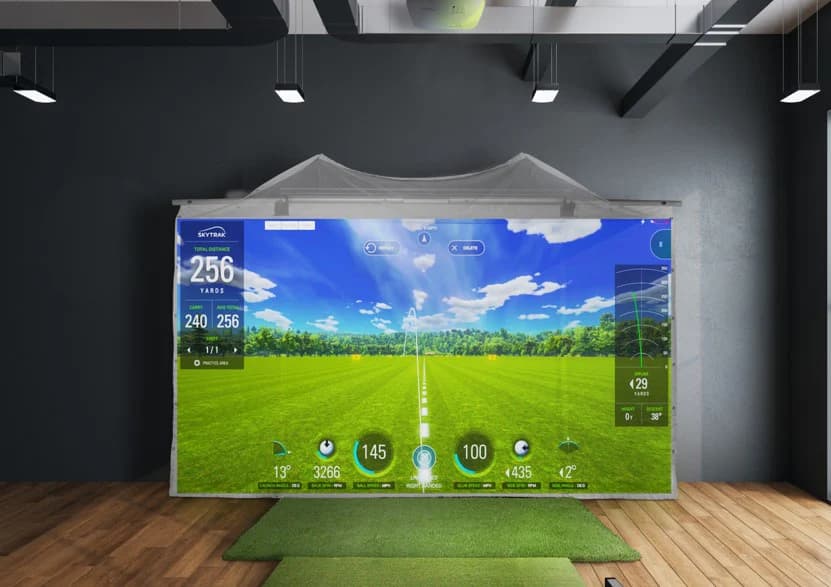
Buying a golf simulator for home isn’t just about finding the most expensive package and calling it a day. It’s about knowing which system actually works in your space, which ones track data accurately, and which ones fit your budget without cutting corners.
I’ve spent the past year testing and comparing these systems hands-on - hitting thousands of shots across seven different setups in garages, basements, and dedicated sim rooms. From the SkyTrak+ SIG10 to the TrackMan iO SIG10, the truth is each simulator serves a different type of golfer. Some shine in small garages, some thrive outdoors, and others deliver tour-level accuracy if you’re willing to invest.
This guide covers the seven best golf simulators for home in 2026, breaking down real-world performance, software compatibility, space requirements, pricing, and which type of player each one fits best.
Quick Comparison: All 7 Simulators
| Rank | Simulator | Best For | Price | Technology | Min. Space | Software |
|---|---|---|---|---|---|---|
| 1 | Foresight Falcon SIG12 | Best Overall | $12,999+ | Overhead Camera | 12W x 16D x 9H ft | FSX Play, FSX 2020, FSX Pro |
| 2 | SkyTrak+ SIG10 | Best Budget | $4,645 | Radar + Camera | 10W x 14D x 9H ft | GSPro, E6 Connect, TGC 2019 |
| 3 | Uneekor EYE XO2 SwingBay | Best Data Depth | $11,000+ | Dual Camera | 12W x 16D x 9H ft | Refine, GSPro, E6 Connect |
| 4 | Garmin R50 SIG10 | Best Small Spaces | $4,999 | Radar | 10W x 14D x 9H ft | Garmin Golf, E6 Connect, Awesome Golf |
| 5 | TrackMan iO SIG10 | Best Accuracy | $17,690+ | Overhead Radar | 10W x 15D x 9H ft | TrackMan (proprietary only) |
| 6 | Bushnell Launch Pro SIG10 | Best Flexibility | $5,499+ | Camera (Foresight) | 10W x 14D x 9H ft | FSX 2020, FSX Play, FSX Pro |
| 7 | ProTee VX SwingBay | Best Overhead System | $8,500+ | Overhead Camera | 10W x 14D x 9H ft | GSPro, TGC 2019, E6 Connect |
Best Golf Simulators for Home: In-Depth Reviews
1. Foresight Falcon SIG12 Golf Simulator Review - Best Overall
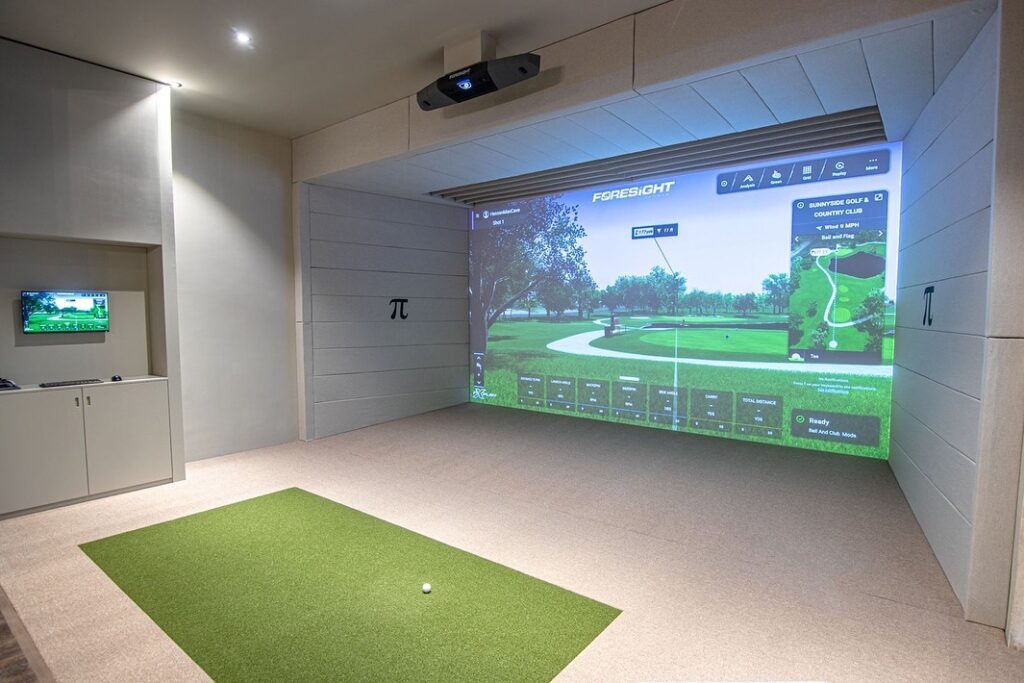
The Foresight Falcon SIG12 is one of the newest additions to the high-end simulator market, and it instantly stands out as one of the best all-around packages you can buy. Built with the same quadrascopic camera technology that powers the GCQuad, the Falcon delivers incredibly accurate readings on ball speed, launch angle, spin, carry distance, and club metrics. Its overhead design means you can switch between right and left-handed players instantly, making it perfect for families, teams, or coaching environments.
Performance is where the Falcon makes its case as the best overall. Indoors, it’s remarkably consistent and needs less ball flight than many radar-based systems. The data holds up even on chips, pitches, and putts, which is something lower-cost units often struggle with. It also integrates seamlessly with FSX Play, FSX 2020, and FSX Pro software, giving you access to realistic courses, training challenges, and advanced coaching tools. Compared to GCQuad, the Falcon offers the same depth of data but with the convenience of an overhead mount.
The SIG12 enclosure package completes the setup with a larger hitting area than the SIG10, making it feel closer to a studio experience. With a premium screen, turf, side netting, and a short-throw projector, it looks and feels like something you’d find in a commercial fitting bay. It does require a wider space than the SIG10 - ideally 12 feet or more - but if you’ve got the room, this setup is about as complete as it gets. For golfers who want accuracy, versatility, and a professional look, the Falcon SIG12 deserves the top spot.
Best For: The golfer who wants it all - top-tier accuracy, overhead convenience, and a setup that looks like a commercial fitting bay.
2. SkyTrak+ SIG10 Golf Simulator Review - Best Budget-Friendly Pick
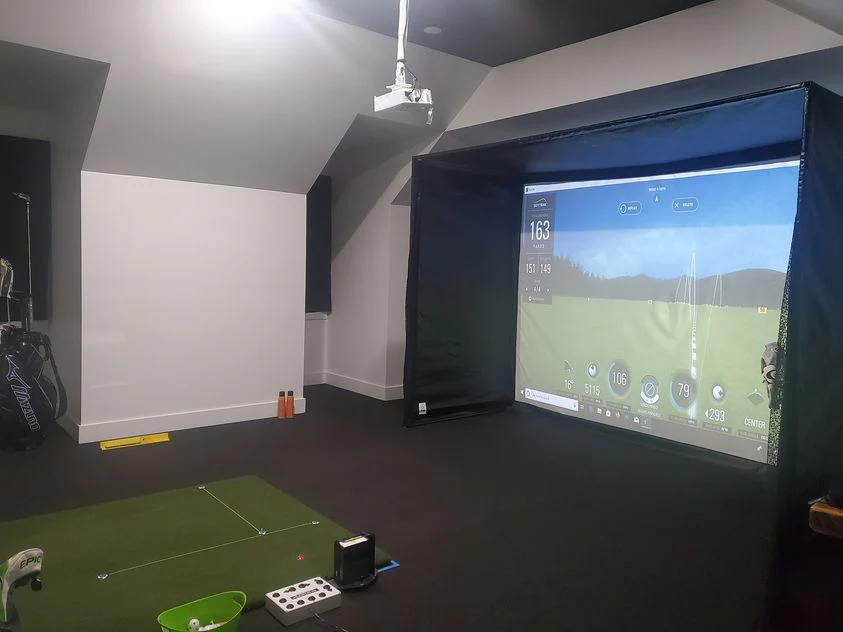
The SkyTrak+ SIG10 is one of the most practical home simulator packages you can buy in 2026. SkyTrak upgraded this model with both camera and Doppler radar tracking, which means you’re not just getting ball flight data anymore. You’re also seeing club metrics like face angle and path. At under $5,000 for the full SIG10 package, it’s the first system that delivers both ball and club data without jumping to the $10K+ range.
What makes this simulator a strong home option is the balance between accuracy and space requirements. The unit needs about 8 feet of ball flight and a ceiling height of 9 feet or more, making it a solid fit for most garages or basements. The SIG10 enclosure pulls it together with a premium screen, side barriers, turf, and a short-throw projector. It feels like a studio setup, not a quick DIY net, which adds to the immersive experience.
The SkyTrak+ also shines with software compatibility. It works with GSPro, E6 Connect, and TGC 2019. These are three of the most popular simulator programs, because it gives you access to hundreds of championship courses and realistic graphics. While the SkyTrak+ isn’t quite as pinpoint accurate as higher-end camera-only systems like the GC3 or GCQuad, its numbers hold up extremely well for the price. If you want reliable feedback, flexibility in software, and a professional look without spending five figures, the SkyTrak+ SIG10 is one of the best values you’ll find.
Best For: Anyone building their first home simulator who wants reliable data and software variety without spending five figures.
3. Uneekor EYE XO2 SwingBay Golf Simulator Review - Best for Data Depth
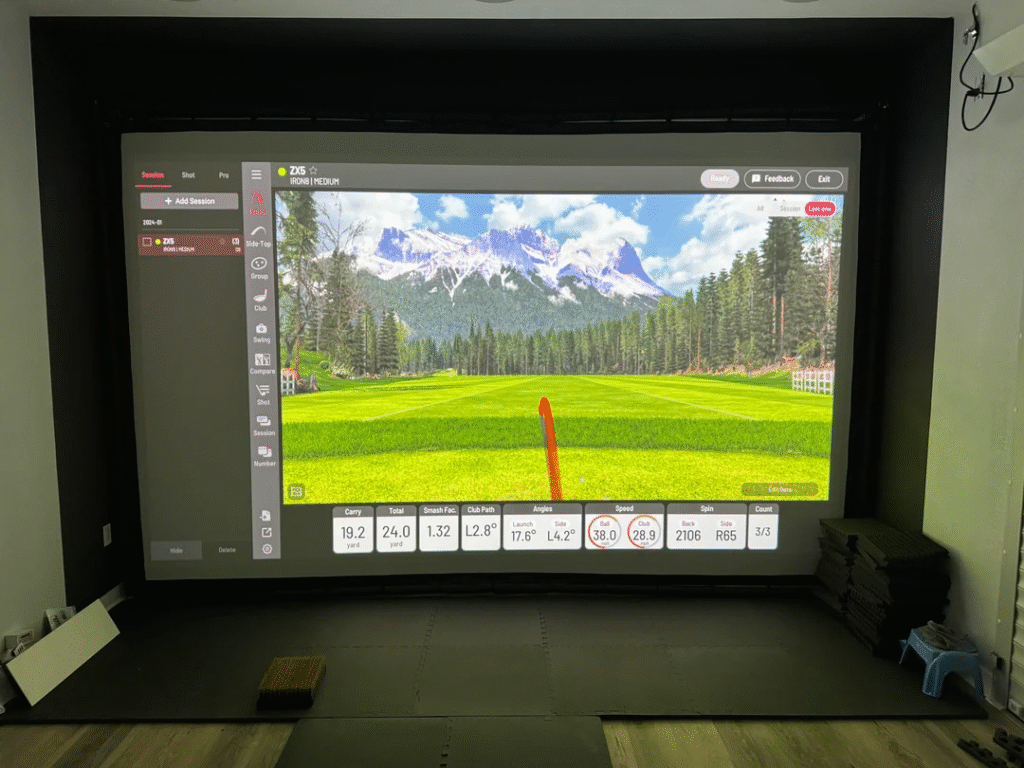
If you’re looking for a system that captures everything about your swing and does it from an overhead position, the Uneekor EYE XO2 SwingBay package is hard to beat. The XO2 uses three high-speed cameras mounted overhead to track both ball and club data. That means you don’t have to move the unit around for right or left-handed golfers, and you’re getting a ton of feedback in real time. From ball speed and spin to face angle, club path, and even slow-motion impact video.
Accuracy is where the XO2 really earns its spot. In testing, spin numbers typically stay within 100 RPMs of high-end systems like TrackMan, and launch angles are within half a degree. Ball speed readings are just as tight, usually within 0.3 mph of tour-level monitors. For players working on consistency or fitters who want every detail of impact, the XO2 brings tour-level feedback into a home environment. The only real catch is space. You’ll want about 12-14 feet of width and 9 feet of ceiling height for it to work properly.
Matched with the SwingBay enclosure, you’re getting a package that feels professional. The premium screen, hitting mat, turf, and projector create a studio-level experience. On the software side, Uneekor offers its own Refine and Refine+ packages, but it also supports third-party programs like GSPro and E6 Connect. That flexibility makes it one of the most versatile systems you can buy. It isn’t cheap, but for golfers who want depth, accuracy, and a permanent build, the XO2 SwingBay setup is as complete as it gets.
Best For: Serious players and club fitters who need every data point - spin within 100 RPMs, launch within half a degree - in a permanent garage or basement build.
4. Garmin Approach R50 SIG10 Golf Simulator Review - Best for Small Spaces
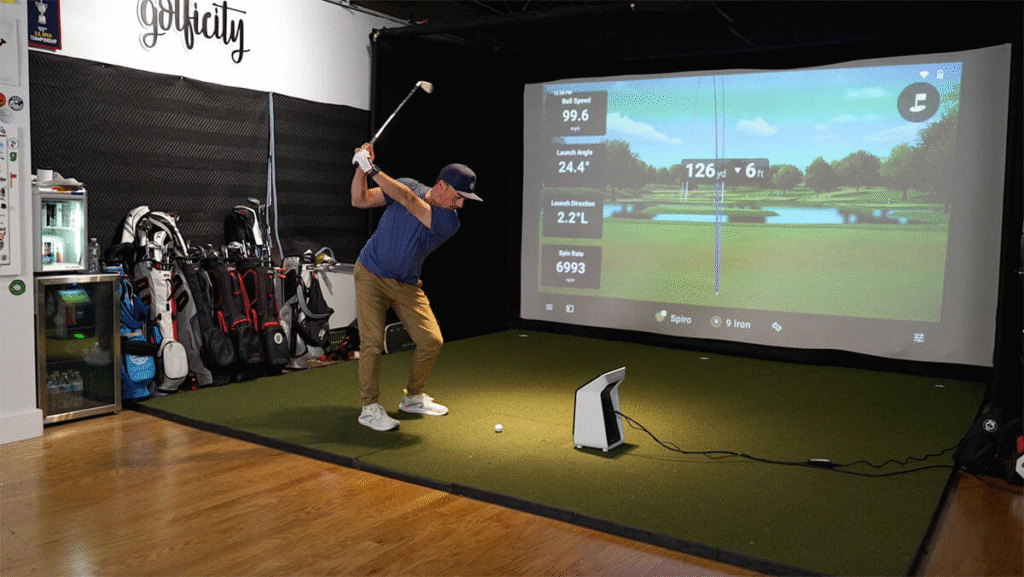
The Garmin Approach R50 SIG10 is a newer name in the simulator space, but it’s quickly gaining traction because of how practical it is for home setups. This unit is designed to be compact and easy to move, making it a good fit if you don’t have a dedicated golf room. It uses radar tracking to measure more than 25 different ball and club metrics, including ball speed, launch angle, spin, apex height, and club path. With the included SIG10 enclosure, you’re turning that compact device into a complete simulator bay with a premium screen, turf, and short-throw projector.
Where the R50 stands out is space efficiency. While most radar-based systems need a ton of depth behind and in front of the ball, the R50 is tuned for smaller areas, working in as little as 14 feet of total room depth. For anyone trying to fit a simulator into a garage or basement where space is tight, that’s a big win. It also offers solid indoor-to-outdoor flexibility, so you can set it up in the yard or at the range when the weather allows.
On the software side, Garmin delivers its own simulator program but also plays nicely with options like E6 Connect and Awesome Golf. The graphics aren’t quite as refined as GSPro or FSX Play, but they’re more than enough for practice and fun course play. If you’re working with limited space but still want accurate ball data and a full simulator experience, the R50 bundled with the SIG10 package is one of the smartest ways to make it happen.
Best For: If your garage or basement is tight on space but you still want a full simulator experience with accurate data, this is the one.
5. TrackMan iO SIG10 Golf Simulator Review - Best for Accuracy

The TrackMan iO SIG10 is built for golfers who want the most precise data possible in a home setup. TrackMan has long been the standard on professional ranges with its outdoor radar systems, and the iO brings that pedigree indoors. Instead of radar, the iO uses infrared optical tracking from an overhead mount to deliver clean reads on ball speed, launch angle, spin, and full club data. Because it’s mounted above the hitting area, it works equally well for right and left-handed players without moving any hardware.
What sets the iO apart is its data reliability and software ecosystem. Ball flight and spin numbers are remarkably tight, matching what you’d expect from the brand’s outdoor units. The simulator also runs on TrackMan’s proprietary software, which is among the most polished in golf. You’re getting championship-level courses, practice ranges, and skill-building tools with graphics that look more like broadcast TV than a typical sim program. The only trade-off is that it doesn’t support third-party options like GSPro or E6 Connect, so you’re locked into TrackMan’s environment.
The included SIG10 enclosure rounds out the package with a professional bay that fits in a garage or dedicated sim room. You’ll need a 9-foot ceiling and about 15 feet of depth to make it work comfortably. It’s a serious investment, but if accuracy is non-negotiable and you want the most refined simulator experience available at home, the TrackMan iO paired with the SIG10 enclosure is in a class of its own.
Best For: Accuracy-obsessed players who want the same data tour pros rely on, wrapped in the most polished software experience in golf.
6. Bushnell Launch Pro SIG10 Golf Simulator Review - Best for Flexibility
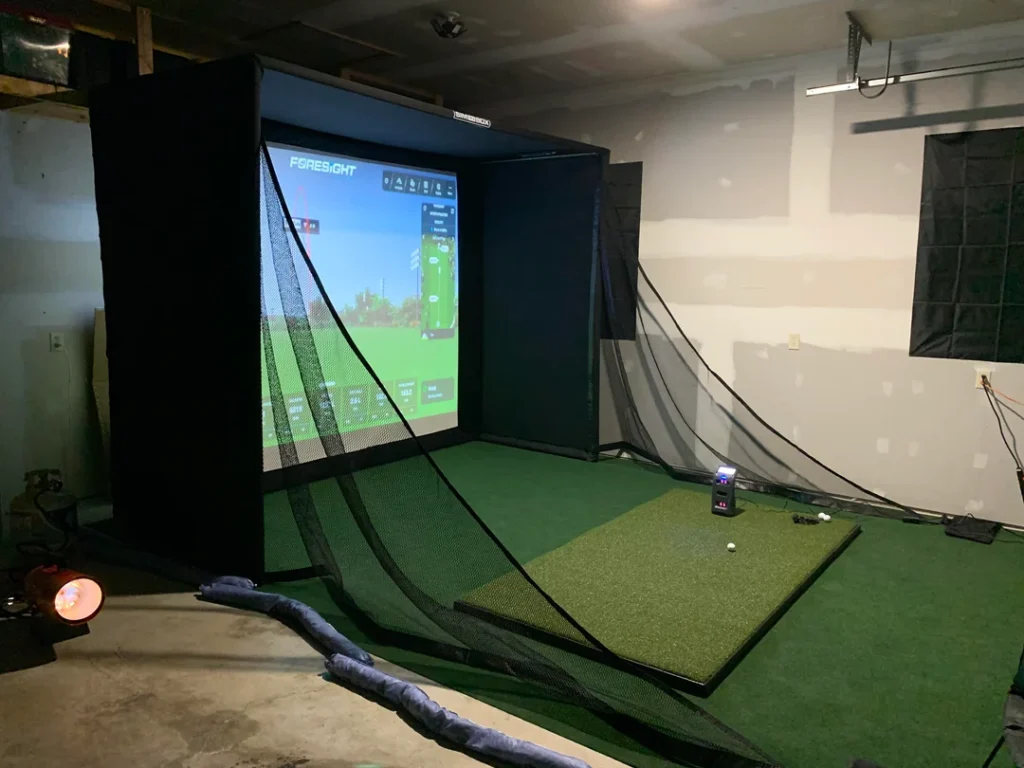
The Bushnell Launch Pro SIG10 is one of the most popular mid-tier simulators because it delivers tour-level accuracy at a lower entry cost than its sibling, the Foresight GC3. That’s because both units share the same camera-based technology. It has three high-speed lenses capturing every detail of launch angle, ball speed, spin rate, and carry distance. Where the Launch Pro differs is in how you unlock features. Bushnell uses a subscription model, so you can start with ball data only and upgrade to full club metrics like path, face angle, and impact location as your needs grow.
Indoors, the Launch Pro is incredibly steady. Unlike radar-based units, it doesn’t get tripped up by low ceilings, tight spaces, or tricky lighting. All it needs is around 7 feet of ball flight to deliver numbers you can trust. The downside is the same as the GC3. If you’re switching between right and left-handed players, you’ll need to slide the unit across the hitting zone. It’s a minor hassle, but worth noting if you host group sessions.
Bundled with the SIG10 package from The Indoor Golf Shop, this setup feels professional right away. The screen, projector, and turf create a clean bay that fits in a garage, basement, or dedicated sim room. On the software side, the Launch Pro runs on FSX 2020, FSX Play, and FSX Pro. This gives you realistic course play, training tools, and coaching features. If you want the accuracy of a $10K+ launch monitor without fully committing upfront, the Launch Pro SIG10 gives you flexibility and performance in one package. For a full breakdown of what you'll spend, check our golf simulator cost guide.
Best For: A smart pick if you want GC3-level accuracy now but don't want to pay for full club data until you're ready to commit.
7. ProTee VX SwingBay Golf Simulator Review - Best Overhead System
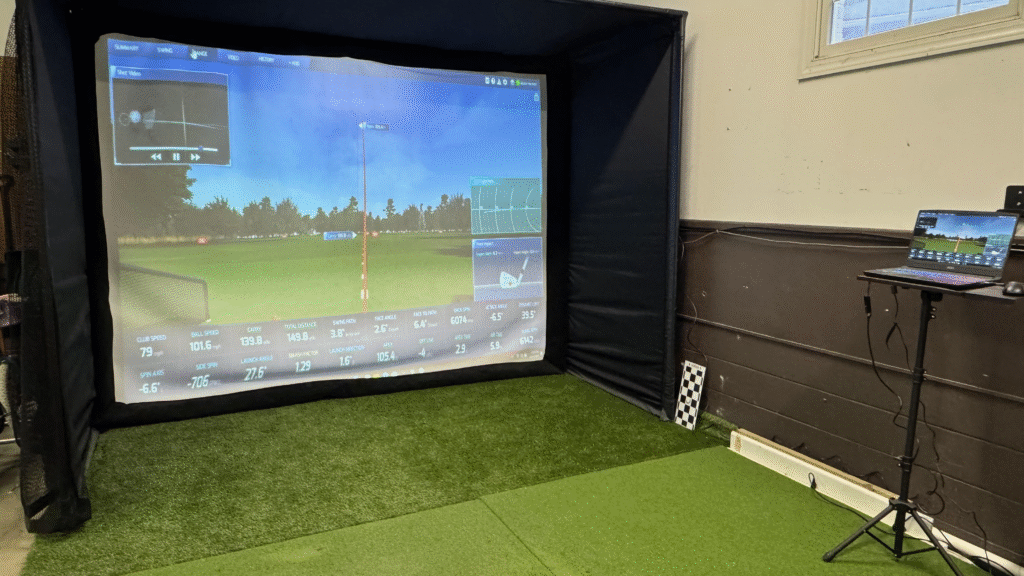
The ProTee VX SwingBay is one of the most exciting new overhead launch monitors because it delivers features usually reserved for $15,000+ systems at a fraction of the cost. Mounted above the hitting area, the VX tracks both ball and club data with dual high-speed cameras and infrared sensors. It measures ball speed, spin, launch angle, club path, face angle, and even gives you impact video replays. It does this all without stickers or reflective dots on the club.
What makes the VX appealing is how easy it is to use in a shared space. Since it’s overhead, you don’t have to shift the unit for right or left-handed players, and the hitting area is larger than what you’ll get with floor-based monitors like the GC3 or Launch Pro. The feedback comes quickly and feels natural, with almost no delay between swing and display. While some early users have pointed out that club data accuracy can lag behind top-tier options like the Falcon or GCQuad, the ball data has been consistently strong, making it a reliable option for most golfers.
Bundled with the SwingBay enclosure, you’re getting a premium screen, projector, and turf setup that feels polished right away. The VX also integrates with GSPro, TGC 2019, and E6 Connect, giving you plenty of course and software flexibility. For golfers who want an overhead system that feels premium but comes in at a more approachable price, the ProTee VX SwingBay delivers a strong balance of features and value for the money.
Best For: Great for shared setups and families - overhead mounting means no gear shuffling between players, and the price is thousands less than comparable systems.
Buying Guide: How to Choose the Best Golf Simulator
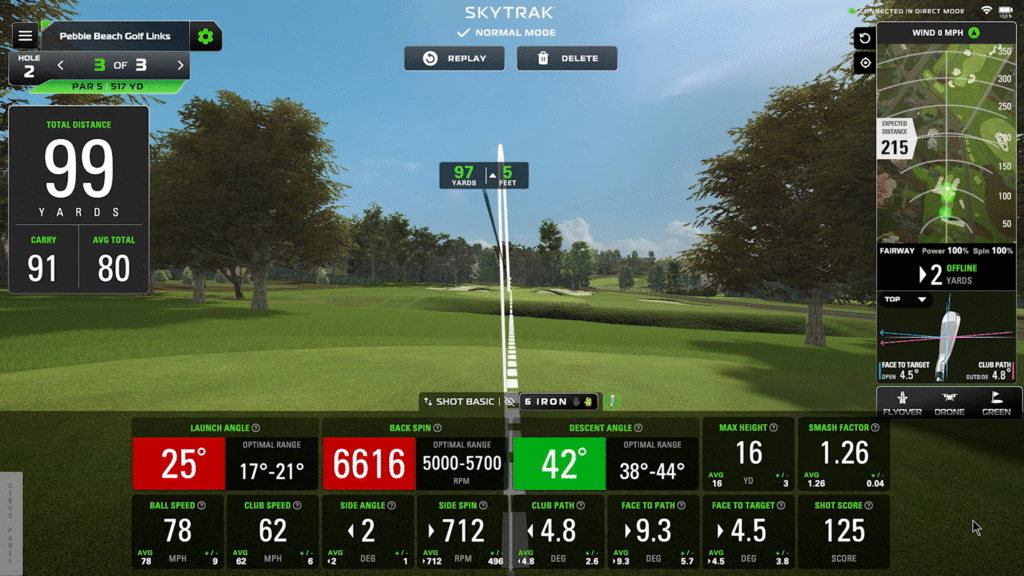
Buying a golf simulator isn’t just about picking the most expensive option. The right choice comes down to your budget, space, and goals. Here’s what to keep in mind:
- Budget Ranges
- Under $5,000: Entry to mid-level setups like SkyTrak+ SIG10 give you both ball and club data without breaking the bank.
- $5,000-$10,000: Systems like Bushnell Launch Pro or Uneekor EYE XO2 SwingBay bring more accuracy and flexibility.
- $10,000+: Premium builds like TrackMan iO SIG10 or Foresight Falcon SIG12 deliver the most accurate data and most polished experience.
- Space Requirements
- Most setups need at least 9-foot ceilings and 14-16 feet of room depth.
- Overhead systems like Uneekor EYE XO2 and ProTee VX need extra width (12+ feet).
- Measure before you buy, and remember space is the #1 mistake people overlook.
- Tracking Technology
- Camera-based systems (GC3, Launch Pro, GCQuad) are most accurate indoors.
- Radar systems (Mevo+, Garmin R50) offer more flexibility outdoors but need more space.
- Overhead systems (EYE XO2, Falcon, ProTee VX) give you hands-free play for right and left-handed golfers.
- Software
- FSX Play and FSX 2020: Best for Foresight units.
- GSPro: Widely loved for realism and community-made courses.
- E6 Connect and TGC 2019: Fun, versatile, lots of variety.
- TrackMan: Polished and premium but limited to its own ecosystem.
FAQs About Golf Simulators
How much space do you need for a golf simulator?
Most setups need around 9 feet of ceiling height and 14-16 feet of depth. Overhead units like the Uneekor EYE XO2 need 12+ feet of width. Check our room dimensions guide for detailed measurements.
What’s the most accurate golf simulator?
High-end camera-based systems like the Foresight Falcon SIG12 and TrackMan iO SIG10 are the most precise. They’re used by fitters and tour players for a reason.
What’s the cheapest golf simulator worth buying?
The SkyTrak+ SIG10 is one of the best budget-friendly choices under $5,000 because it delivers both ball and club data along with strong software support.
Can you use a golf simulator outdoors?
Yes. Radar-based units like the Garmin R50 SIG10 or FlightScope Mevo+ work well outside. Camera-based systems are better indoors.
Are golf simulators accurate for putting?
Premium models like the Foresight Falcon SIG12 and ProTee VX SwingBay handle putts well, but entry-level systems may struggle with speed and roll accuracy.
Are golf simulators worth it?
For most golfers, yes. A home golf simulator lets you practice year-round regardless of weather, get instant feedback on every shot, and play world-famous courses without leaving your house. Most serious golfers see measurable improvement within the first few months of consistent use.
How much does a golf simulator cost?
Home golf simulators range from about $4,600 for entry-level packages like the SkyTrak+ SIG10 to $30,000+ for premium setups with TrackMan or Foresight technology. The total cost depends on the launch monitor, enclosure, projector, and software you choose. See our full golf simulator cost breakdown for details.
What is the best golf simulator under $5,000?
The SkyTrak+ SIG10 at $4,645 and the Garmin Approach R50 SIG10 at $4,999 are the two strongest options under $5,000. Both include a full enclosure package with screen, projector, and turf. The SkyTrak+ edges ahead with broader software compatibility.
Can you build your own golf simulator?
Yes. A DIY golf simulator build can save money if you source your own enclosure, screen, and projector separately. You’ll still need a quality launch monitor for accurate data. Our how to build a golf simulator guide walks through the full process step by step.
What software do golf simulators use?
The most popular golf simulator software includes GSPro, E6 Connect, TGC 2019, and Foresight’s FSX Play/FSX Pro. GSPro is a fan favorite for its realistic graphics and community-built courses. TrackMan uses its own proprietary software. Software compatibility varies by launch monitor, so check before you buy.
Final Thoughts: What’s the Best Golf Simulator for You?
The best golf simulator isn’t the most expensive one honestly. It’s the one that fits your space and helps you actually practice in the comfort of your home.
- If you’re on a tighter budget but want quality data, go with the SkyTrak+ SIG10.
- If you want overhead freedom and deep data, the Uneekor EYE XO2 SwingBay delivers.
- For pure accuracy, nothing tops the TrackMan iO SIG10 or Foresight Falcon SIG12.
- If you want flexibility and a lower starting cost, the Bushnell Launch Pro SIG10 is a smart middle ground.
Every simulator on this list has been tested, trusted, and built into real home setups. The key is finding the one that matches your budget, space, and goals - then using it consistently. That’s how a simulator stops being a luxury and turns into the best practice tool you’ll ever own.
Still not sure which setup is right for you? Our golf simulator cost guide breaks down exactly what you’ll spend, and our room dimensions guide helps you figure out if your space is ready.
Related Articles
Check out these related guides and reviews from Par Percision: