
When you watch how the best players in the world practice, you start to notice a pattern. Pros don’t use one launch monitor for everything. They switch tools based on where they’re practicing, the type of work they’re doing, and how much detail they want from each swing.
Outdoors, Trackman 4 is the standard. Indoors, GCQuad runs the show. At home, Tiger uses Full Swing. And in between, GC3 or Bushnell Launch Pro show up when pros need something portable that still delivers numbers they trust.
Once you understand why each system shows up in different environments, the whole picture becomes clear.
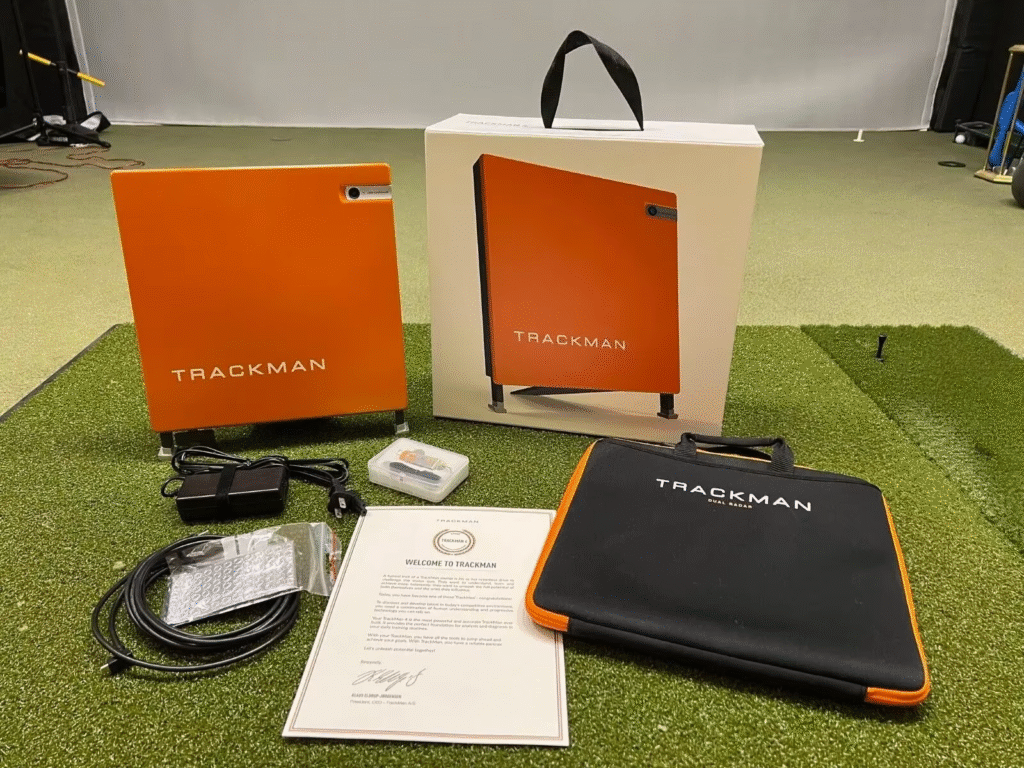
Trackman 4 Is the Go-To Launch Monitor for Pros Outdoors
Step onto a PGA Tour range and Trackman 4 is the unit sitting behind most players. Radar simply makes more sense outdoors because it can track the full flight instead of predicting ball behavior from a short indoor window.
Trackman gives pros a true look at what the ball actually does once it leaves the face. That’s why players use it when they’re working on long irons, shaping shots in the wind, building dispersion patterns, or checking real rollout on firm turf.
Outdoor sessions are all about honest ball flight. That’s Trackman’s strength, and it’s why it continues to dominate practice ranges year after year.
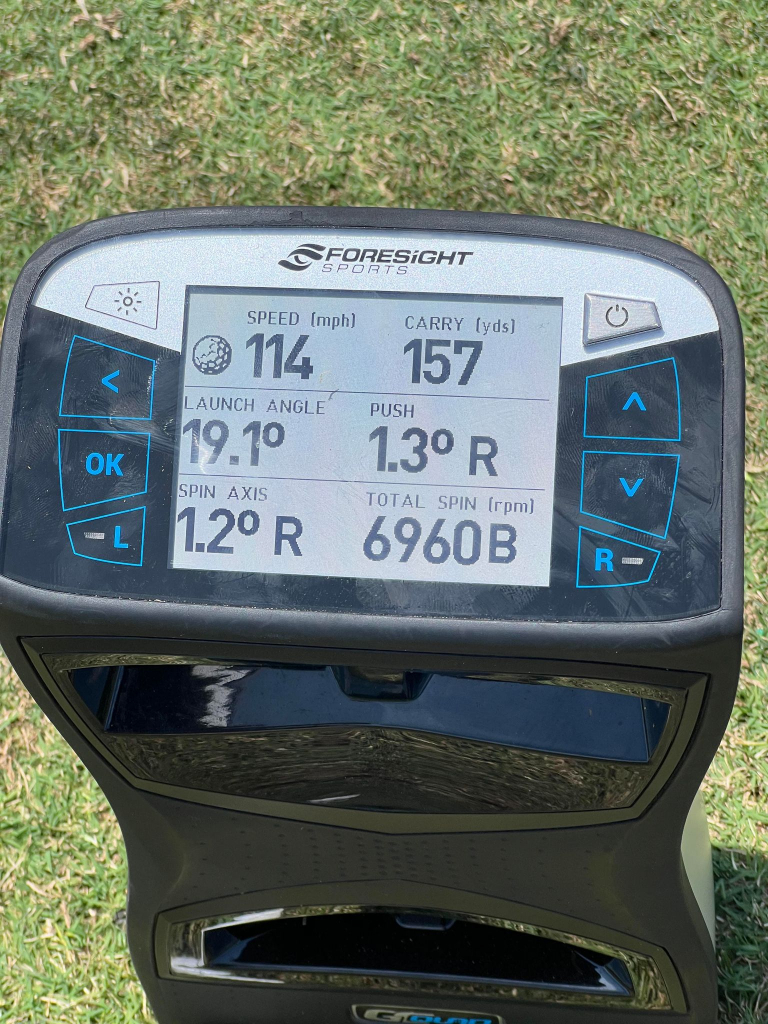
GCQuad Takes Over Indoors for One Reason: Precision at Impact
When the practice moves inside, everything changes.
There isn’t enough space for radar to follow the ball, so photometric systems become the only real option. GCQuad rises to the top because it captures impact with a level of detail that helps elite players make micro-adjustments they can trust.
- Spin stays consistent.
- Launch readings don’t drift.
- Face impact location is crystal clear.
- Club data reacts exactly how it should.
This is why GCQuad sits inside fitting bays, tour vans, private studios, and the indoor setups of players who care about precise feedback when they’re grinding on their swing.
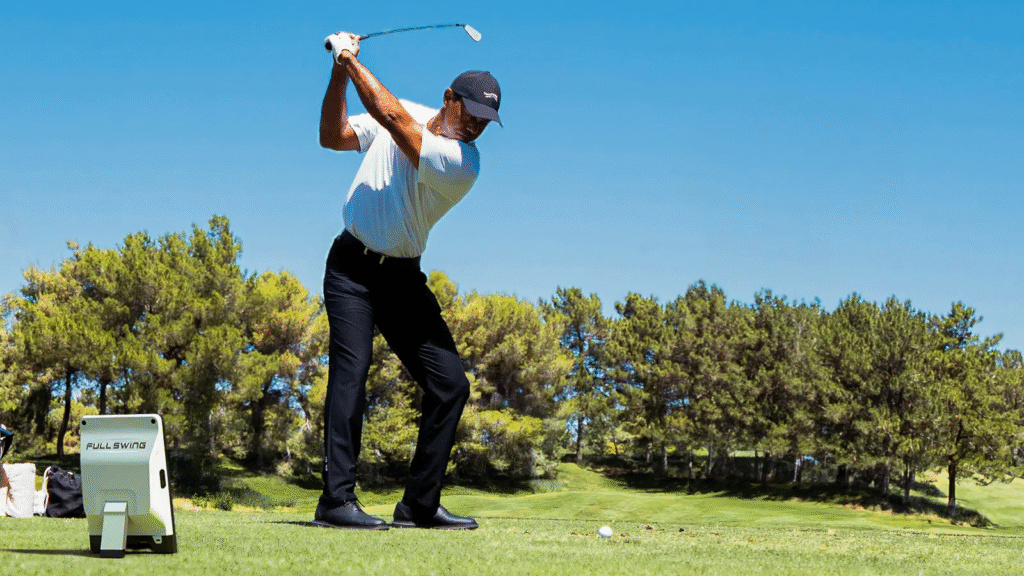
Tiger Woods and Full Swing: Why It Shows Up at His House
Tiger trains at home on a Full Swing simulator, and that setup gets talked about a lot. What people forget is that this is his indoor practice environment, not his outdoor one.
Full Swing works for him because it blends simulation with a smooth indoor experience. The visuals look strong, the feel of the shot is consistent, and it’s built to match the way he practices when he’s off the course.
It doesn’t replace Trackman or GCQuad. It’s simply the tool that fits his home routine.
And when the best player of his generation keeps something in his space, people notice.
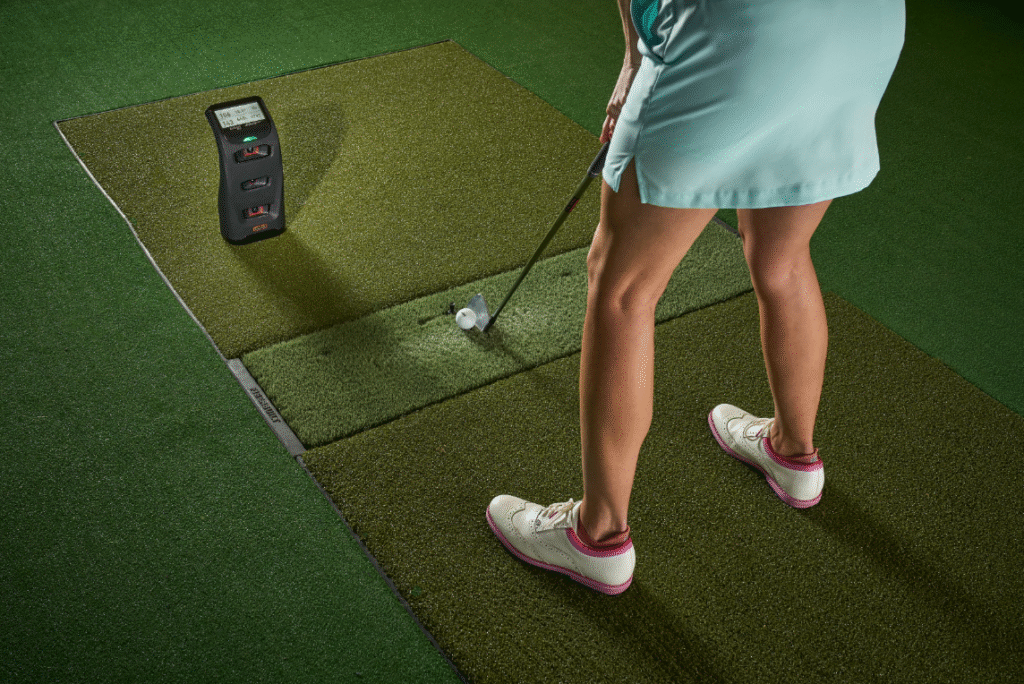
GC3 and Bushnell Launch Pro: Trusted by Pros in Specific Situations
You won’t see GC3 or Bushnell Launch Pro lined up behind players on tour ranges, but they definitely appear in the spaces where convenience and portability matter.
Pros use them when they want:
• reliable ball data during travel
• a quick setup in the garage
• a smaller indoor hitting area
• a secondary device outside of full studio work
• something they can take to events without hauling a full system
These units give tour-level ball data without the footprint or investment of GCQuad. Coaches and fitters also travel with them because they’re easier to move between jobs.
Why Cheaper Launch Monitors Rarely Show Up in Pro Practice
This has nothing to do with price and everything to do with consistency.
Lower-cost systems often struggle with spin variation, wedge accuracy, face-to-path tracking, and tight indoor environments. When a pro is working through a change and needs repeatable numbers, one misread creates doubt.
Pros remove uncertainty. They choose tools they can trust. That usually means GCQuad or Trackman.
Which Launch Monitor Makes the Most Sense for You?
If you’re trying to choose based on your own practice routine, match your environment the same way pros do.
- Indoor practice with a focus on accuracy: GC3 or Bushnell Launch Pro make sense if you want detailed spin numbers without going into GCQuad territory.
- Indoor and outdoor versatility on a tighter budget: SkyTrak+ or FlightScope Mevo+ give a strong mix of accuracy and flexibility.
- Entry-level practice without a big investment: Garmin R10 delivers the basics and helps you understand your swing patterns.
- Building a long-term studio with pro-level expectations: GCQuad or Trackman 4 give you the same foundation players rely on every day.
The goal isn’t to copy what the pros do. It’s to pick the system that fits your goals, your space, and the type of practice that helps you improve.
Final Thoughts
Pros use different launch monitors for different reasons. Trackman 4 rules outdoor ranges because it measures full flight. GCQuad dominates indoors thanks to its precision at impact.
Full Swing fits Tiger’s home setup because it blends realism with convenience. GC3 and Bushnell Launch Pro show up when players want something portable that still produces reliable numbers.
Once you understand how pros match their tools to their environment, it becomes easier to build a setup that actually helps your game. And if you’ve practiced with any of these systems yourself, I’m always curious which one felt the most natural for you.