Physical Address
304 North Cardinal St.
Dorchester Center, MA 02124
Physical Address
304 North Cardinal St.
Dorchester Center, MA 02124

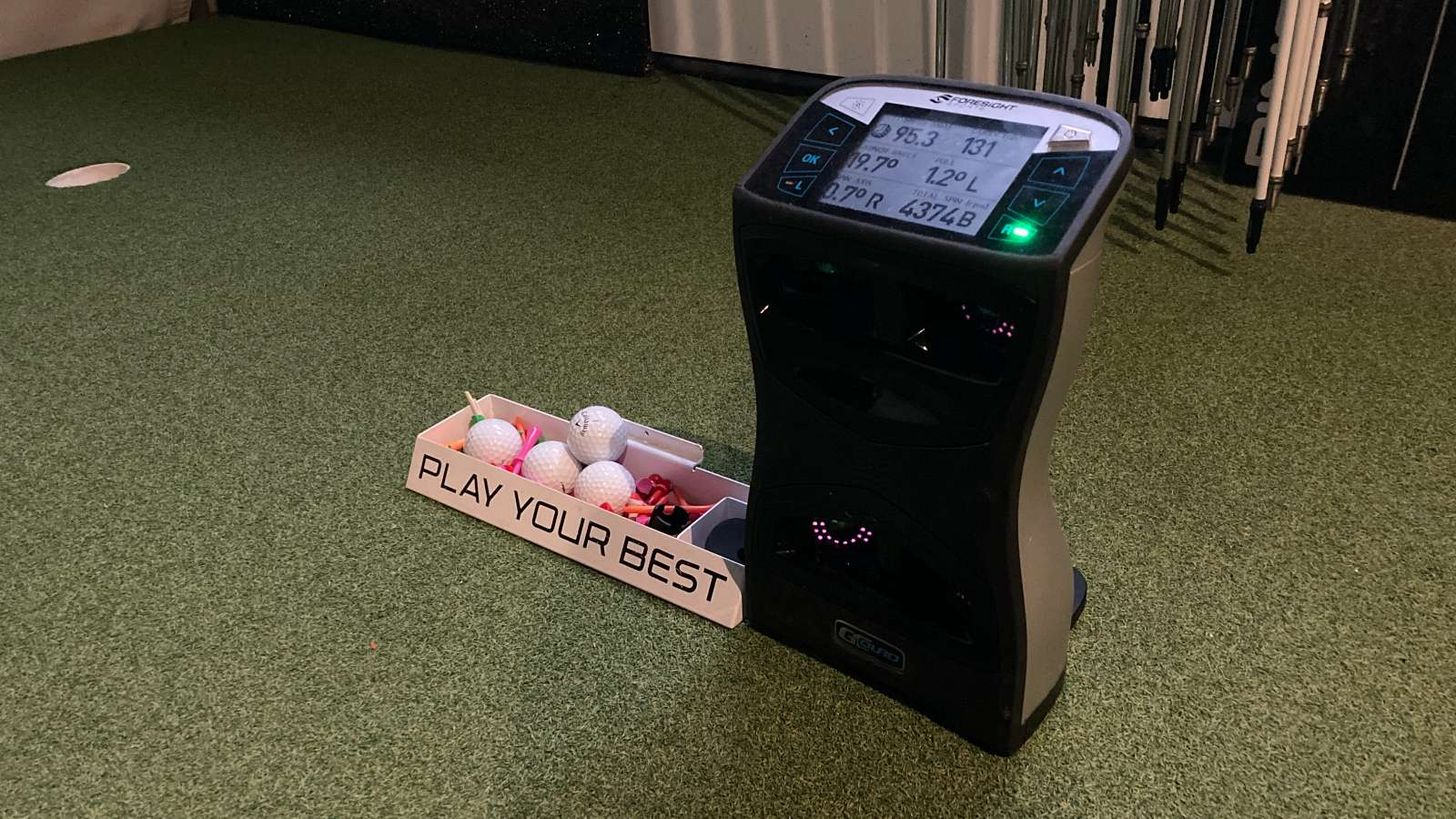
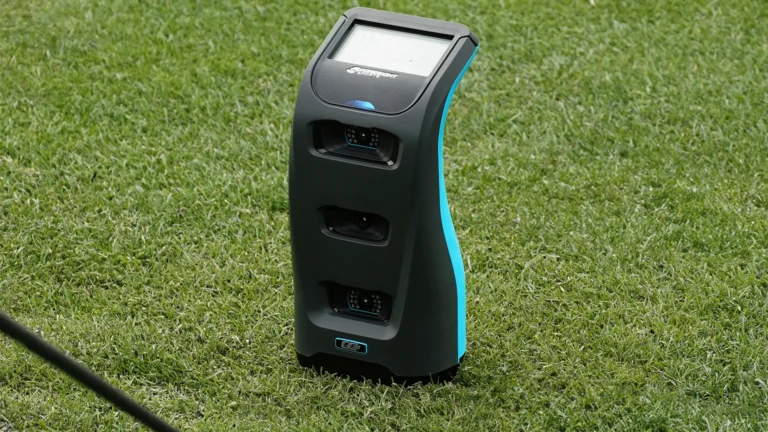
The GCQuad has a reputation that follows it everywhere. It’s the launch monitor you see lined up on Tour ranges, trusted by players who make a living off precise numbers. That alone tells you this isn’t just another premium device. It’s the most accurate launch monitor built for golfers who want the same data the pros rely on to shape shots and score low.
But here’s the real question golfers care about once the excitement settles. If you’re building a home golf simulator, does the GCQuad genuinely give you an advantage that cheaper launch monitors can’t? Or is this one of those machines that looks incredible, costs $15,999, but ends up being more power than most golfers will ever use?
My first time testing the GCQuad made that answer clearer. I set it up indoors, took a few swings, and the level of detail it revealed almost felt uncomfortable. On a 7-iron shot I thought I flushed, the GCQuad exposed a slightly open face and a hair of heel contact that explained the 6-yard fade. That was the moment it clicked. This photometric launch monitor doesn’t guess, adjust, or estimate. It shows you the truth.
If you’ve been wondering how the GCQuad stacks up in a simulator setup for home use, this review breaks down what actually matters. Performance. Accuracy. Software experience. Indoor vs outdoor use. And yes, how it compares across the three searches buyers keep typing into Google:
• GCQuad vs GC3
• GCQuad vs Trackman
• GCQuad vs QuadMAX
By the end, you’ll know exactly who the GCQuad is built for, who shouldn’t buy it, and whether it earns a spot as the best professional golf simulator for your space.
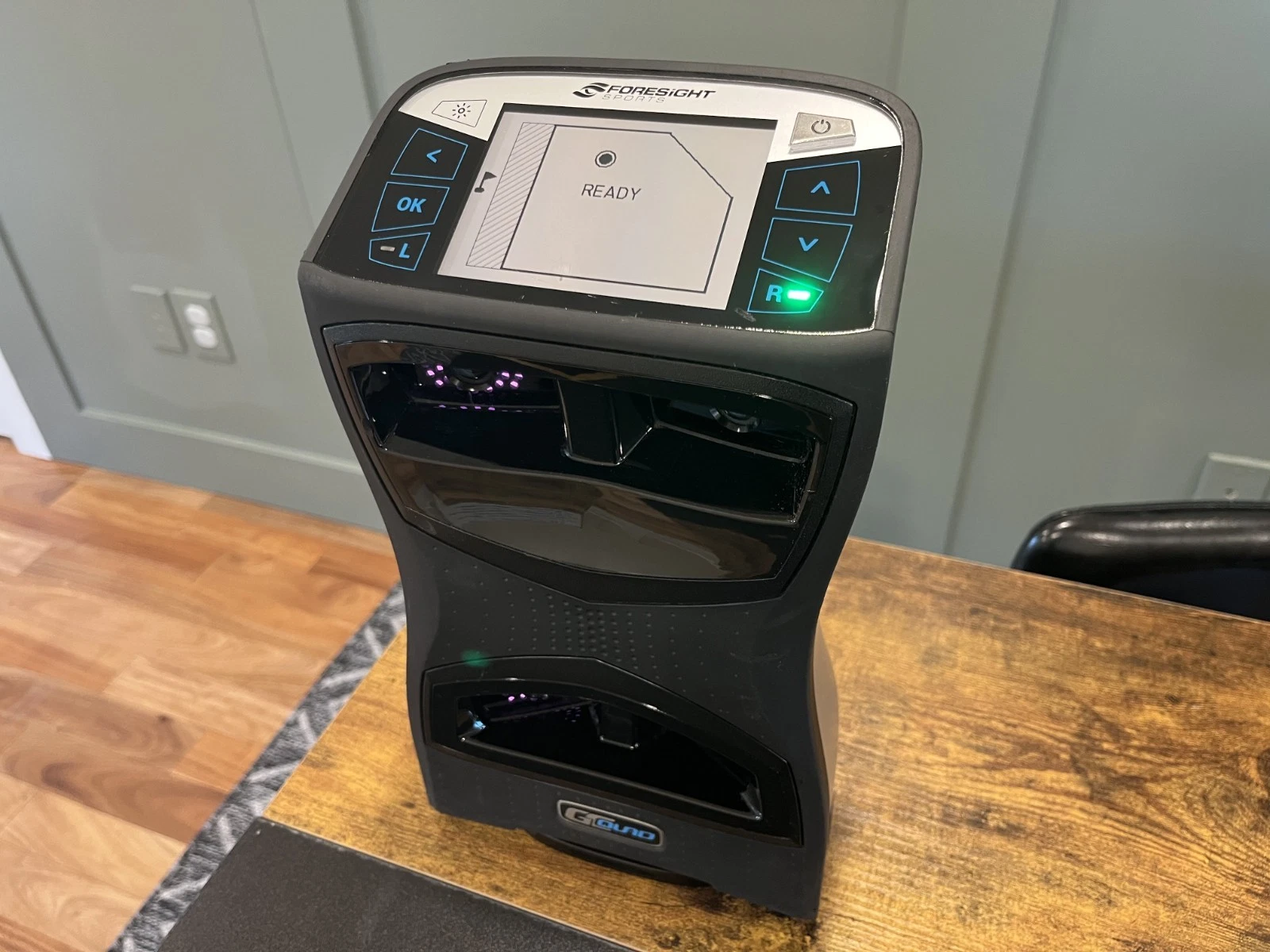
The GCQuad has built its name on accuracy, and it earns it. Indoors or outdoors, the numbers are brutally honest. You get ball and club data that leaves no room for assumptions. It measures what happened, why it happened, and how your swing caused it.
This is where it separates from mid-range launch monitors. The GC3 and Bushnell Launch Pro are incredibly strong for the price, but the GCQuad adds the deeper layers of club data that advanced players, coaches, and fitters rely on.
You don’t just see ball speed and carry. You see impact location, lie, loft at impact, closure rate, and face angle with a level of clarity that forces improvement. This kind of feedback accelerates skill development in a way cheaper units simply can’t match.
If you’re practicing indoors in a home golf simulator, accuracy needs to be repeatable in a controlled space. The GCQuad delivers that consistency every single session, which is why so many teaching pros won’t work without it.

Here’s the difference in one line.
If ball data helps you understand your shot, club data helps you fix it.
This is where the GCQuad justifies its price. Yes, it provides all the standard ball metrics like launch angle, ball speed, side angle, spin, carry, and spin axis. But the reason better players call it the most accurate launch monitor is because of the club metrics that expose what your swing really did at impact.
Here are the club metrics that cheaper launch monitors rarely provide with this level of precision:
• Face angle
• Loft and lie at impact
• Club path
• Impact location
• Closure rate
For most golfers, the difference between a push, draw, or wipey fade often comes down to millimeters and degrees. Seeing exactly where the club struck the ball and how the face was moving gives you a plan to correct it instead of guessing or compensating.
This is why the GCQuad is trusted in fittings. It doesn’t just show what the ball did. It tells you what the club caused.
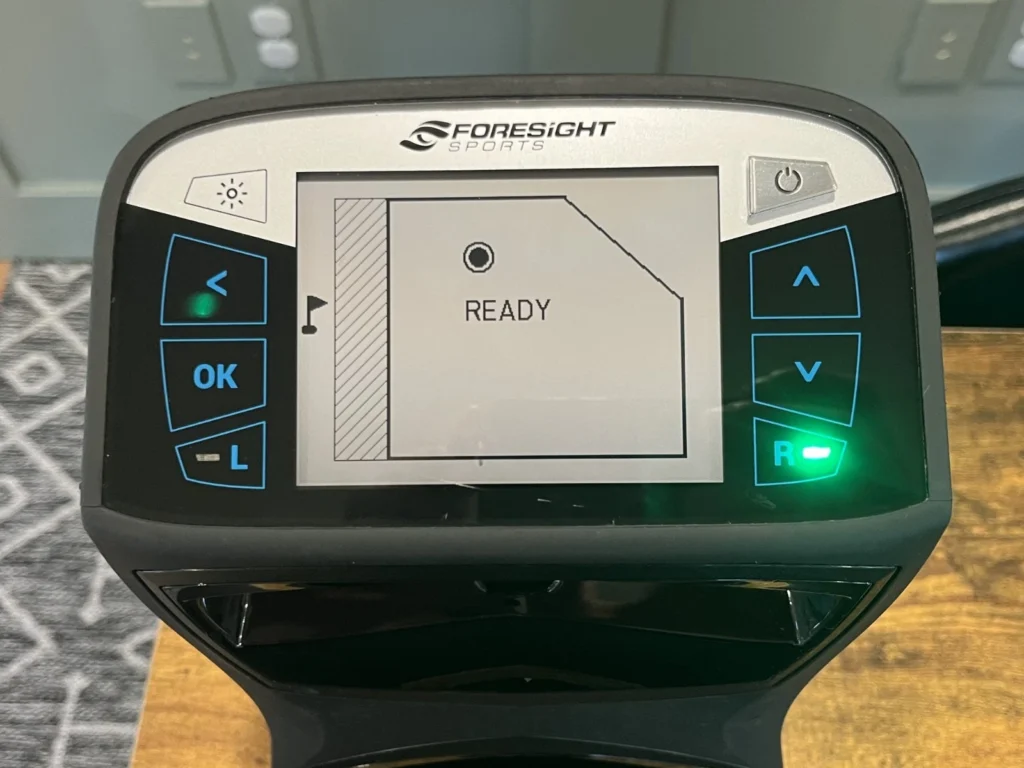
If you’re considering the GCQuad as the center of a home golf simulator, the first question most people have is simple. Does it actually elevate the simulator experience enough to justify the cost?
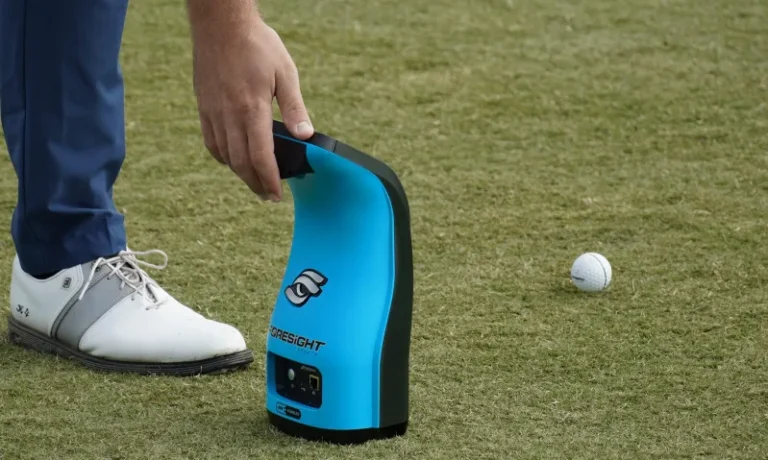
The short answer is yes for golfers who want realism, teaching-level feedback, and long-term improvement. Because it’s a photometric launch monitor that sits beside the ball rather than behind it, the GCQuad performs indoors with minimal space requirements. Most setups need about 10 feet wide, 10 feet deep, and 9 feet high.
You also get the benefit of a larger hitting zone compared to the GC3. It’s easier to move through a session without repositioning the unit. That matters when you’re grinding through practice rather than casually playing a sim round with friends.
When you combine the GCQuad’s accuracy with quality software like FSX Play, FSX 2020, or GSPro, the simulator feels immersive and believable. The ball flight, curvature, distance, and spin react the way you see outdoors. That realism is what people are paying for.
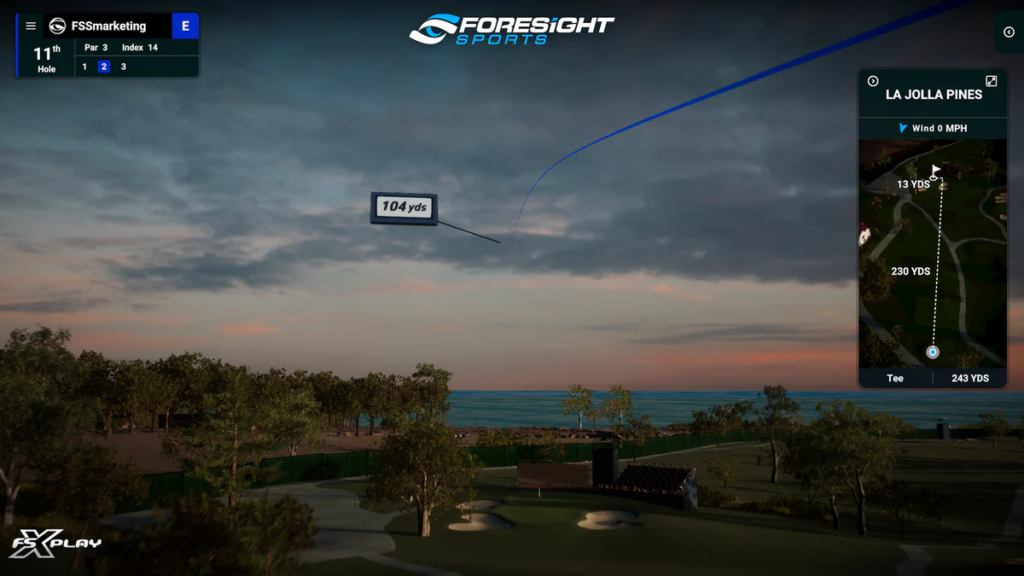
Software is where a launch monitor either feels like a training tool or a full golf simulator. The GCQuad pairs with multiple options, and each brings something different to the home setup.
FSX Play delivers the most lifelike graphics. If your goal is realism, immersion, and playing full rounds that feel close to the real course, FSX Play hits that mark. Lighting, shadows, and ball flight visuals look sharp, and when paired with the GCQuad’s accuracy, the experience feels natural.
FSX 2020 leans more toward practice, data tracking, and skill building. The layouts are cleaner and more performance-focused. If you like working on dispersion patterns, wedge ladder drills, swing path, or dialing distances, FSX 2020 gives you the tools to get better quicker.
GSPro has become a favorite for home golf simulators because of the community courses and realistic physics. People enjoy that it blends performance with a gameplay experience that feels competitive and fun. With the GCQuad feeding GSPro accurate club and ball data, the results don’t feel like “sim guesses.” They line up to real-world expectations, which makes league play meaningful.
The GCQuad doesn’t lock you into one ecosystem. You can use it as a professional training tool one day and run a full simulator setup for friends the next. If you want a simulator that hits both entertainment and improvement, the GCQuad gives you that flexibility.
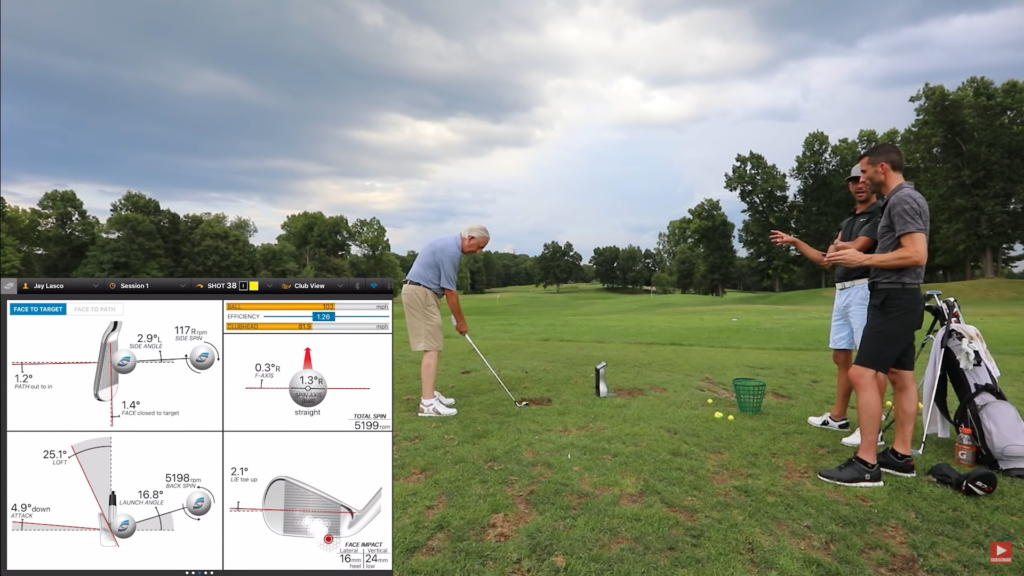
Most golfers searching for the GCQuad eventually hit the same comparison: GCQuad vs GC3. Both produce highly accurate ball data, and both can anchor a home golf simulator with confidence. The difference comes down to how deep you want to go into your swing.
The GC3 gives you strong ball data with limited club metrics, and for many golfers that’s enough. The GCQuad adds the layers that expose the true cause of your ball flight. If you care about impact location, lie and loft at contact, face angle, and closure rate, that’s where the GCQuad earns its gap in price.
The GC3 makes sense for golfers who want accurate numbers without overanalyzing. The GCQuad is built for golfers who want the full diagnostic picture. If you want long-term game development, lessons, or clubfitting-level detail in your home simulator, the GCQuad pulls ahead.
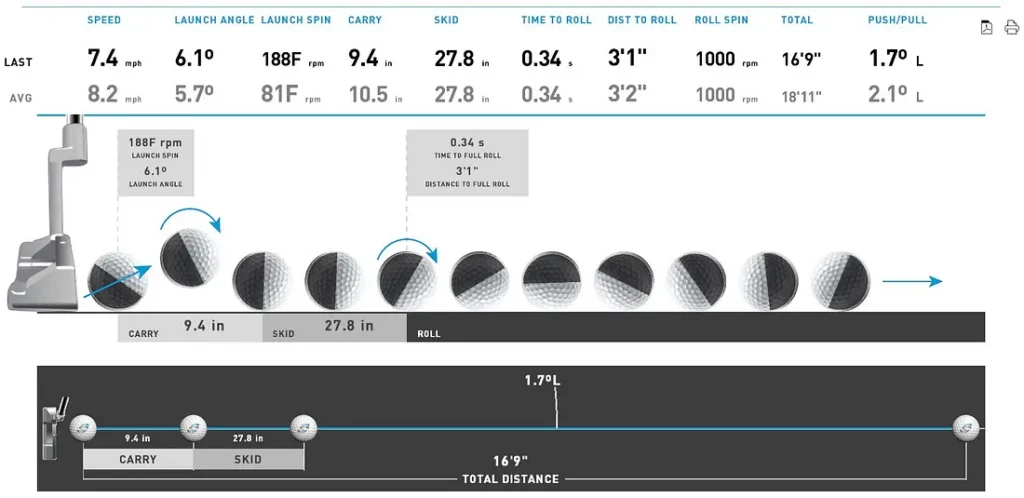
This comparison comes up for every serious golfer researching a professional golf simulator. The Trackman name carries weight, and for outdoor use it’s world-class. But for indoor simulator setups, the GCQuad offers an edge that matters.
Trackman relies on radar, which needs space in front of and behind the ball to track data accurately. Indoors, limited ball flight can impact readings. The GCQuad is photometric, capturing data at impact with cameras, so it doesn’t rely on long ball flight to track accuracy.
If you have a large outdoor space and want the best radar-based system, Trackman makes sense. For most people building an indoor golf simulator, the GCQuad delivers more reliable performance in a tighter space. That’s why touring pros often practice indoors with GCQuad and outdoors with Trackman. It’s not about which one is technically better. It’s about using the right tool for indoor versus outdoor conditions.
The QuadMAX adds convenience and upgrades, but the core accuracy remains the same. You’re paying for added features, not better numbers. If budget isn’t a factor and you want the newest version with expanded features, the QuadMAX is a solid choice. But if your priority is the most accurate launch monitor for a home golf simulator, the GCQuad still delivers that standard.
For many golfers, the GCQuad hits the sweet spot between professional performance and long-term value. The QuadMAX is the premium upgrade, not a replacement for what the GCQuad already does extremely well.
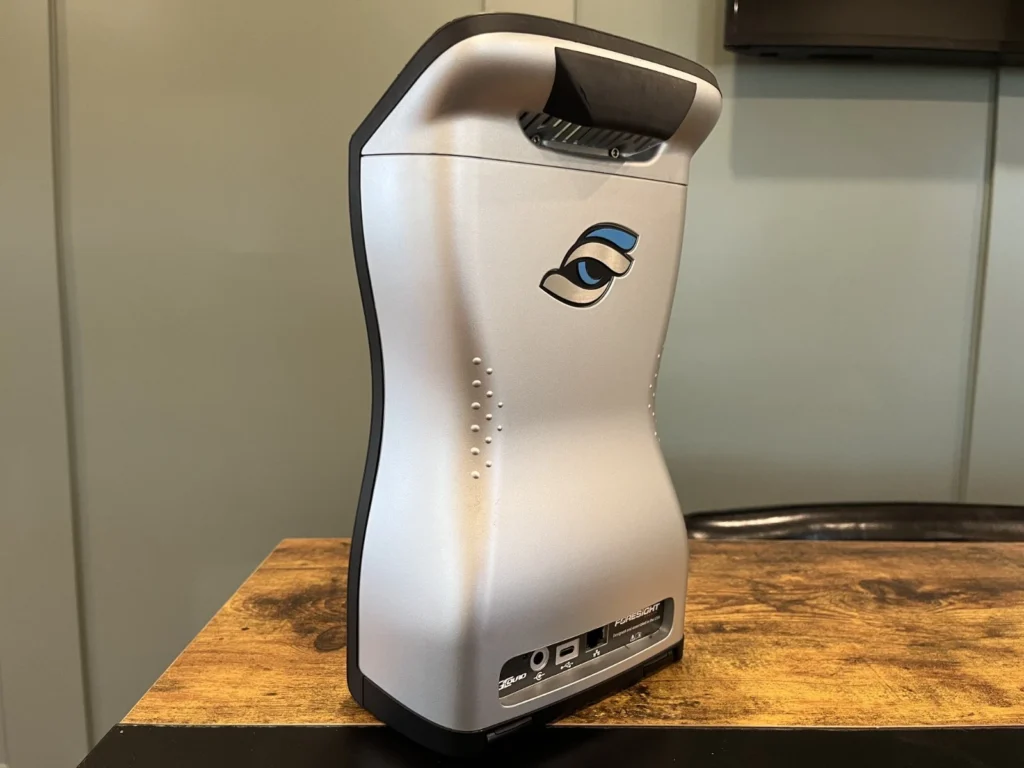
The first thing you notice when hitting shots on the GCQuad is how unforgivingly honest it is. There’s no rounding or smoothing to make your numbers look cleaner than they are. If you miss the center by half an inch, the ball flight will reflect it, and the club data will show you exactly why.
During testing, a simple pitching wedge session highlighted the difference. A shot that felt solid flew 4 yards long with 1.8 degrees more loft at impact and a touch of toe strike. Seeing that level of detail forces better swing awareness. It removes guessing, which speeds up improvement.
This is what makes the GCQuad the most accurate launch monitor trusted for fittings, coaching, and indoor golf simulators. The data exposes the real cause of your miss, not just the result. For golfers who want to eliminate weak patterns in their game, this level of accuracy is where progress comes from.
The GCQuad performs at a high level in both environments, which is why it’s used on Tour ranges and in home golf simulator studios.
Indoors, the photometric system shines because it doesn’t need ball flight distance to measure accurately. Small spaces don’t compromise the data, making it ideal for a home golf simulator build. Outdoors, you still get accurate readings even with turf changes or different lies, which keeps practice realistic.
The only challenge outdoors shows up when switching between right and left-handed players. You’ll need to move the unit, and that interrupts group sessions. Indoors with a single dominant handed group, the experience feels effortless.
The Foresight Sports GCQuad delivers unparalleled ball and club data accuracy, making it the top choice for professionals and serious golfers.
Pros:Cons:
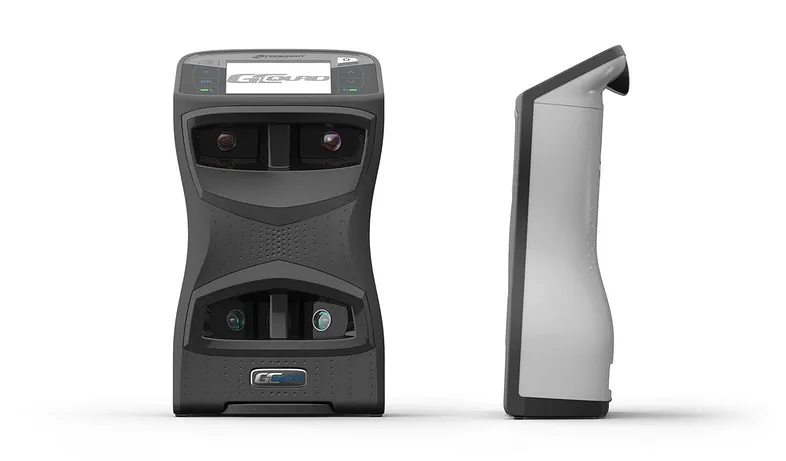
The GCQuad fits golfers who want the best experience and use the data to get better. If you’re building a professional golf simulator studio, coaching, clubfitting, or training with long-term goals, the GCQuad supports all of that.
It’s also ideal for players who value total trust in their numbers. If you want the peace of mind that your carry distances inside your simulator match real course performance, the GCQuad gives you that confidence.
Not every golfer needs something this advanced, and being honest about this helps avoid regret.
If you mainly want entertainment and casual simulator play with friends, more affordable launch monitors deliver that experience without the $15,999 spend. If you don’t plan to use club data to improve your swing, you would be paying for information that won’t impact your game.
The GCQuad becomes a smart buy only when the depth of data aligns with your goals.
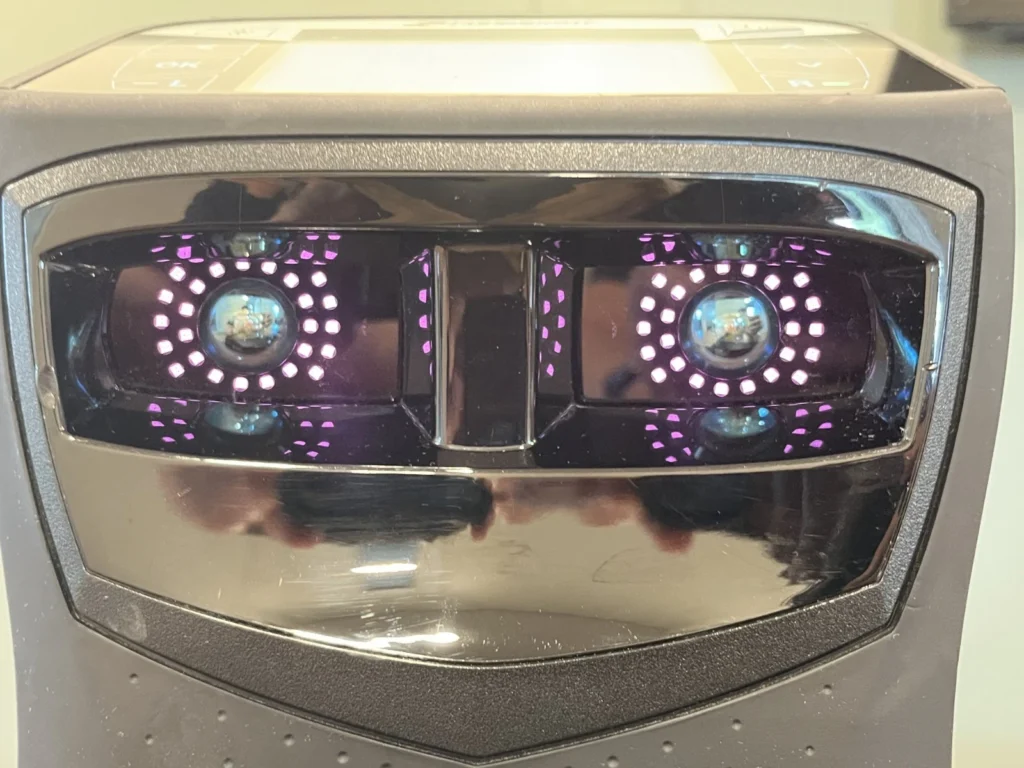
Yes, if you want professional-grade accuracy and plan to use club data to train and improve. If you just want entertainment, other options offer better value.
Yes. You’ll get full ball data without stickers. To unlock full club data including face angle, closure rate, and impact location, stickers are required.
GCQuad is stronger indoors due to its photometric system. Trackman remains a top option outdoors thanks to full-flight radar tracking.
Yes. Many home simulator owners pair GSPro with the GCQuad for course play and use FSX for practice sessions.
A space around 10 feet wide, 10 feet deep, and 9 feet high works well for most setups.
The GCQuad earns its place at the top of the launch monitor market. The accuracy, depth of data, and trusted performance indoors make it a powerful tool for golfers who care about skill growth and realism inside a home golf simulator.
At $15,999, it’s an investment. But if you’re the kind of golfer who wants to train with the same feedback the pros rely on, the GCQuad delivers exactly that. For players who don’t need this level of insight, the GC3 or Bushnell Launch Pro provides more than enough performance for less.